


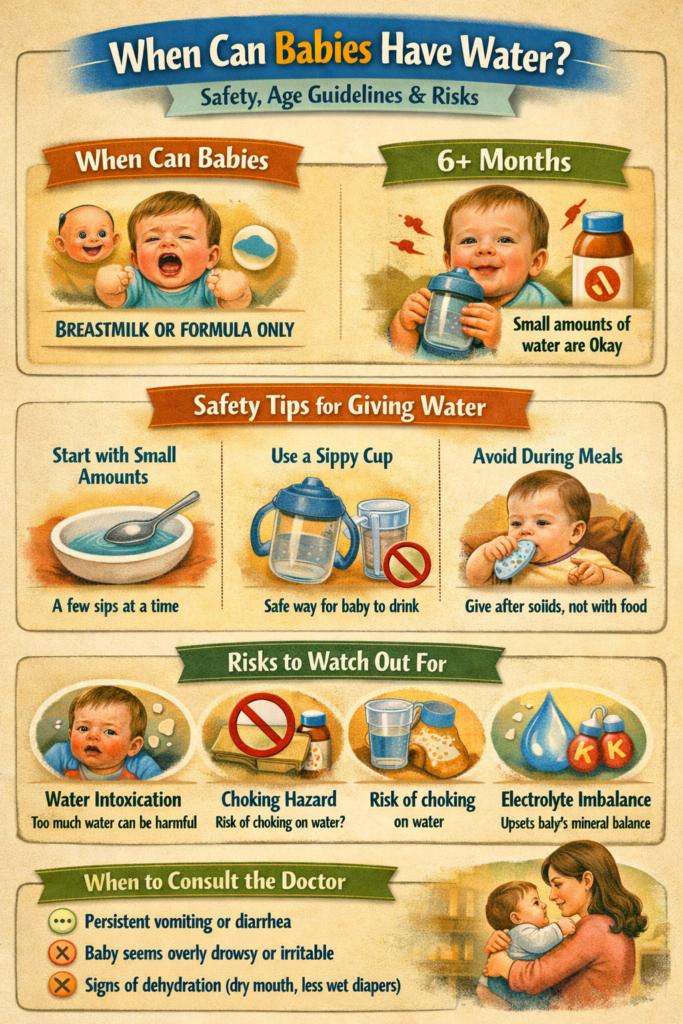
The Short Answer: When Can Babies Have Water? Babies should not drink water before they are 6 months old. Until the 6-month mark, breast milk or formula provides 100% of the hydration your baby needs, even on the hottest summer days. Introducing plain water too early can lead to dangerous health conditions, including water intoxication and severe nutrient deficiency. Once your baby reaches 6 months of age and begins eating solid foods, you can safely introduce small sips of water (about 4 to 8 ounces per day) in an open or straw cup to help them practice swallowing and prevent constipation.
The Hydration Instinct: Why We Get It Wrong
As adults, we are constantly bombarded with messaging about the importance of hydration. We carry our massive stainless steel tumblers everywhere, tracking our daily ounces and sipping constantly. So, when we look at our tiny, delicate newborns—especially during a sweltering July heatwave—our deepest protective instincts kick in. It feels incredibly counterintuitive, even irresponsible, to withhold water from a sweating infant.
However, infant physiology operates in a completely different universe than adult physiology. What is a life-sustaining habit for a grown adult can be a life-threatening hazard for a newborn.
Understanding exactly why babies cannot have water requires a fascinating look into their developing organs, their rapid growth needs, and the perfect biological design of their primary food sources. This comprehensive guide will walk you through the precise age guidelines for introducing water, the scientific reasons behind the medical warnings, and actionable strategies for teaching your growing older baby how to finally master the cup.
The Absolute Ban: Why Babies Under 6 Months Cannot Have Water
It is a universal rule across pediatric organizations globally: zero plain water before six months of age. This isn’t a gentle suggestion; it is a strict medical guideline. There are two primary reasons why plain water can be dangerous for babies under six months old.
1. The Risk of Severe Malnutrition and Nutrient Loss
A newborn’s stomach is remarkably small. At birth, it is roughly the size of a cherry. By one month, it has only grown to the size of a large chicken egg. Because their stomach capacity is so limited, every single ounce of liquid they consume must be packed with the essential fats, proteins, carbohydrates, and vitamins required to double their birth weight in a matter of months.
When you give a young baby water, you are filling that tiny, precious real estate with a zero-calorie liquid. This creates a false sense of fullness. A baby whose stomach is full of water will inevitably drink less breast milk or formula, leading to missed calories. Over time, even small amounts of daily water can interfere with their electrolyte balance and nutrient absorption, resulting in a failure to thrive and delayed growth.
2. The Danger of Water Intoxication (Hyponatremia)
The most severe risk of giving young infants water is a condition called oral water intoxication, which leads to hyponatremia.
A baby’s kidneys are incredibly immature during the first few months of life. They simply do not have the filtration capacity to rapidly process and excrete large volumes of plain water. If a baby ingests too much water, the excess fluid dilutes the normal sodium levels in their bloodstream. Sodium is the critical electrolyte responsible for maintaining nerve and muscle function.
When blood sodium levels plummet, the body tries to stabilize itself by pushing the excess water into its cells, causing those cells to swell. While a swollen muscle cell might just ache, a swollen brain cell is catastrophic. Symptoms of water intoxication in infants include:
- Extreme lethargy or unresponsiveness
- Irritability and confusion
- Vomiting
- A drop in body temperature
- Facial swelling
- Seizures and, in severe cases, coma
A Real-World Example: Consider the tragic but all-too-common scenario where a well-meaning, financially strapped parent tries to “stretch” expensive infant formula by adding extra water to the bottle. While they believe they are making the food last longer while still feeding their child, they are actually delivering a dangerous, diluted dose of nutrition that directly puts the baby at risk for hyponatremia. Always mix formula exactly according to the package directions.
But What About Hot Weather?
This is the number one question pediatricians receive in the summer. If you are sweating on a 90-degree day, your baby must be thirsty, right?
They are thirsty, but water is still not the answer. Both breast milk and appropriately mixed infant formula are composed of over 80% water. They are meticulously formulated to provide perfectly balanced hydration alongside nutrition. If your baby seems exceptionally thirsty or hot, the solution is simply to offer more frequent feedings of breast milk or formula. The milk will quench their thirst, keep them safely hydrated, and maintain their delicate electrolyte balance.
The 6-Month Milestone: Introducing the Cup
Right around the six-month mark, your baby’s world expands dramatically. Their digestive system has matured, their kidneys are functioning much more efficiently, and they are likely showing all the classic signs of readiness for solid foods—sitting up with minimal support, exhibiting excellent head control, and showing a keen interest in what you are eating.
As you start offering purees or baby-led weaning foods, you can finally introduce water. However, it is crucial to reframe your mindset: water at six months is for practice, not for primary hydration.
At this stage, your baby is still getting the vast majority of their hydration from milk. The goal of introducing water is twofold:
- Skill Acquisition: Drinking from an open cup or a straw requires complex oral-motor coordination. It takes time for the tongue, lips, and jaw to learn how to manage a thin, fast-moving liquid.
- Constipation Relief: As your baby’s gut adapts to processing solid, fibrous foods (like bananas, sweet potatoes, and oatmeal), their stool will naturally become firmer. A few sips of water during meals help move this new fiber through the digestive tract smoothly.
When you are ready to pick out your little one’s very first drinking vessels from your favorite baby essentials collection, look for small, soft silicone open cups or simple straw cups. Pediatric speech-language pathologists generally advise skipping the traditional “hard-spout” sippy cups, as they can promote an immature tongue-thrust swallow pattern and interfere with proper palate development.
Age-by-Age Hydration Guide
To remove the guesswork, use this detailed, age-based breakdown of an infant’s fluid needs.
| Baby’s Age | Primary Hydration Source | Safe Amount of Plain Water | Purpose of Water | Recommended Delivery Method |
| 0 – 6 Months | Breast milk or formula ONLY. | 0 ounces. | N/A | Bottle or Breast. |
| 6 – 12 Months | Breast milk or formula (approx. 24-32 oz daily). | 4 to 8 ounces per day maximum. | Practice oral-motor skills; aid digestion of new solid foods. | Small open cup or straw cup offered during meals. |
| 12 – 24 Months | Whole cow’s milk (or fortified alternative) and water. | 8 to 32 ounces per day. | Primary hydration alongside food and milk. | Open cup, straw cup, or regular water bottle. |
Types of Water: Tap, Filtered, or Nursery?
Once you are cleared to offer those first exciting sips at six months, the next logical question is: what kind of water is best? Walking down the bottled water aisle can be overwhelming. Let’s break down the most common options:
Tap Water
For the vast majority of families living in areas with treated municipal water supplies, tap water is perfectly safe and highly recommended. The primary benefit of municipal tap water is that it usually contains fluoride, a naturally occurring mineral that is essential for preventing tooth decay and strengthening your baby’s erupting teeth.
Bottled and Filtered Water
If you use a standard refrigerator filter or a pitcher filter, you are likely removing some chlorine and improving the taste, which is fine. However, if you rely entirely on reverse-osmosis filtered water or standard bottled water, be aware that these are usually completely stripped of fluoride. If you choose this route exclusively, you should discuss fluoride supplements with your pediatrician or pediatric dentist.
Nursery Water
“Nursery water” is a commercially sold product often marketed heavily to new parents. It is simply distilled water that has had specific minerals—often including fluoride—added back into it. While it is perfectly safe, it is usually an unnecessary expense if your local tap water is safe to drink.
Well Water
If your home relies on private well water, you must exercise more caution. Well water is not regulated by municipalities and can contain unsafe levels of nitrates, iron, or bacteria. You should have your well water professionally tested for safety before offering it to an infant. If you are unsure, boiling the water for one minute and letting it cool, or using bottled water, is the safest interim strategy.
As you navigate these choices and build out your child’s daily routines, relying on a trusted hub like Wobblebee can provide peace of mind that you are creating a safe, nurturing environment for your family.
Recognizing True Dehydration in Babies
If we aren’t using water to hydrate them in the early months, how do we know they are getting enough fluids? Dehydration is a serious concern, particularly if your baby is battling a stomach bug, fever, or respiratory virus.
Instead of obsessing over ounces consumed, pediatricians recommend monitoring the “output.” A well-hydrated baby will have at least 6 heavily wet diapers in a 24-hour period. Their urine should be pale yellow and relatively odor-free.
If your baby is becoming dehydrated, you will notice distinct physical shifts:
- Fewer than 6 wet diapers in 24 hours.
- Urine that is dark yellow or smells unusually strong.
- A sunken fontanelle (the soft spot on the top of their head).
- Crying without producing any tears.
- Dry, sticky lips and mouth.
- Unusual lethargy or extreme fussiness.
If you observe any of these signs, do not offer plain water. Contact your pediatrician immediately. They will likely recommend offering more breast milk or formula, or they may advise the use of an oral rehydration solution (like Pedialyte), which contains the exact, scientifically calculated balance of sodium, sugar, and water needed to rapidly restore an infant’s electrolyte levels safely.
Setting Your Baby Up for Cup Success
Teaching a six-month-old to drink from a cup is a hilariously messy endeavor. Prepare to change a lot of bibs and wipe down a lot of high chair trays.
Start by offering just an ounce or two of water in an open silicone cup during a meal. Hold the cup for them, rest it gently on their lower lip, and tilt it just enough so the water touches their lips. Allow them to lap it up rather than pouring it into their mouth. They will cough, they will sputter, and they will probably dump it on their own head. This is all completely normal sensory exploration.
If you are incorporating a straw cup, you can teach them how to use it through the “pipette method.” Dip a silicone straw into a glass of water, put your finger over the top hole to trap the liquid, and place the bottom of the straw into your baby’s mouth. Release your finger slightly to let a few drops fall on their tongue. They will quickly associate the straw with liquid and begin attempting to pull the water up themselves.
Patience is key. Some babies take to the cup immediately, while others need months of daily exposure before they figure it out. Keep offering it consistently with meals, keep the vibe low-pressure and playful, and eventually, the skill will click. Exploring the engaging, developmental-friendly feeding tools in a dedicated baby shop can make this messy transition much more enjoyable for both of you.
Frequently Asked Questions
Can I dilute my baby’s formula with extra water to make it last longer?
No, absolutely never. This is incredibly dangerous. Adding extra water to formula dilutes the critical nutrients and throws off the infant’s electrolyte balance. This can quickly lead to malnutrition, seizures, and water intoxication. Always follow the exact mixing instructions on the formula container.
Does my baby need water on a really hot day?
If your baby is under 6 months old, no. They do not need water, even in extreme heat. You should manage their hydration by offering more frequent breast milk or formula feedings. If your baby is over 6 months, you can offer small sips of water (up to 4-8 ounces a day), but milk remains their primary hydration source.
What is oral water intoxication?
Oral water intoxication occurs when a baby consumes too much plain water, which their immature kidneys cannot process. The excess water dilutes the sodium in their bloodstream (hyponatremia), causing cells to swell. This can lead to lethargy, vomiting, seizures, and severe brain swelling.
Can I give my 4-month-old water for constipation?
No. If your baby is under 6 months old and experiencing constipation, do not give them water. Instead, consult your pediatrician. They may suggest gentle bicycle kicks, a warm bath, or, in some cases, a small amount of 100% prune or apple juice specifically dosed by a doctor.
Should I boil tap water before giving it to my 6-month-old?
If you have municipal tap water that is clean and safe, you generally do not need to boil it for a 6-month-old. However, if you rely on private well water, or if you are traveling internationally to an area with questionable water safety, you should always use bottled water or vigorously boil the local water for at least one minute (and let it cool) before offering it to your baby.