

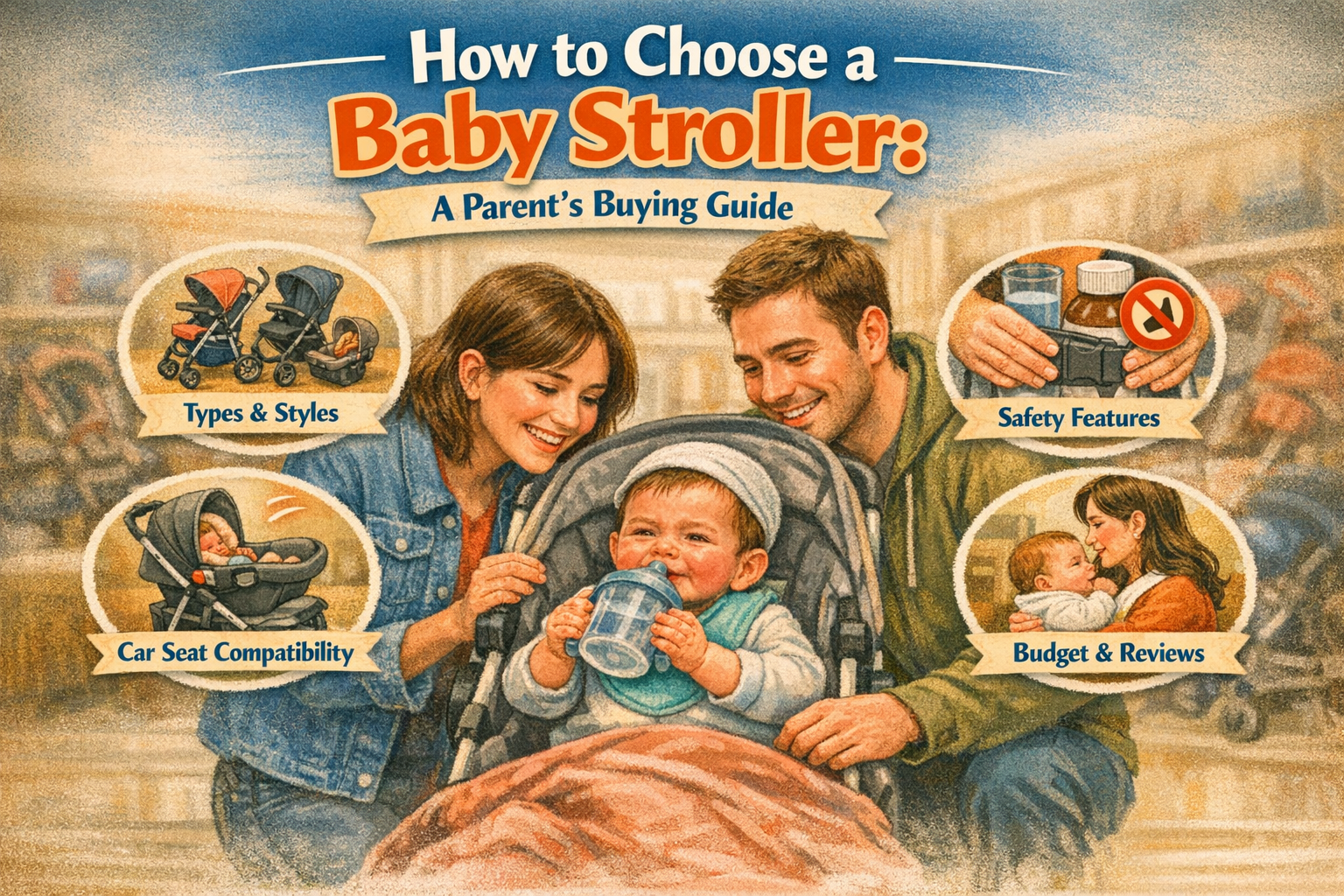
To choose a baby stroller, first assess your daily environment, lifestyle, and primary transportation method. Next, select a stroller type that fits those parameters—such as a full-size, umbrella, or jogging model. Finally, prioritize essential features like a five-point safety harness, a one-handed folding mechanism, durable wheels, and adequate storage space to ensure long-term comfort and convenience.
The sheer volume of baby gear available today is enough to make any new parent’s head spin. You want a safe, comfortable ride for your child, but you also need something that won’t require a degree in engineering to fold or an oversized SUV to transport. A stroller is arguably the most significant piece of baby equipment you will purchase. It is your primary vehicle for exploring the world together, and getting it right the first time saves you money, time, and daily frustration.
As you prepare your nursery and begin gathering your everyday essentials from the Wobblebee community, finding the right set of wheels should be at the top of your priority list. The perfect stroller doesn’t just hold your baby; it accommodates your lifestyle, fits your physical space, and makes leaving the house feel manageable rather than overwhelming.
Understanding Your Lifestyle Needs
Before looking at specific models, you must define how and where you will use the stroller most frequently. A beautifully designed pram might look stunning, but if you live in a fourth-floor walk-up apartment, it will become a daily nightmare. Buying a stroller requires a realistic look at your day-to-day routine.
City Dwellers vs. Suburbanites
If you live in a dense urban environment, your stroller is essentially your car. You need a model that can handle uneven sidewalks, fit through narrow cafe doors, and fold up quickly for public transit. Agility and a compact footprint are your top priorities. You will likely want something with excellent suspension to absorb the shock of cobblestones, but lightweight enough to carry up subway stairs.
Conversely, if you live in the suburbs, your stroller needs to be easy to lift into the trunk of a car. Suburban parents often prioritize travel systems that click seamlessly from the back seat to the stroller frame, making errands with a sleeping newborn infinitely easier. You might also prioritize a massive under-seat basket for hauling groceries from the parking lot to your front door.
Travel Frequenters and Active Parents
Families who frequently board airplanes or take road trips require lightweight, easily collapsible frames. Strollers that can fold down to fit into an overhead airplane bin are lifesavers for frequent flyers.
Meanwhile, highly active parents who plan to run or hike will need robust suspension systems and air-filled tires to absorb the shock of rough terrain. Identifying your primary identity—city walker, suburban driver, jet-setter, or trail runner—will immediately eliminate half of the strollers on the market, narrowing your focus to the ones that will actually serve you well.
The Main Types of Baby Strollers
The juvenile products industry categorizes strollers based on their primary function. Understanding these categories is the secret to making an informed decision.
Full-Size Strollers
The full-size stroller is the heavy-duty workhorse of the baby gear world. These models are built to last from the newborn days straight through the toddler years. They typically offer deep seat reclines, reversible seats (so your baby can face you or the world), massive storage baskets, and extendable canopies. The trade-off is their weight and footprint; they are heavy and take up significant space in a hallway or trunk.
Travel Systems
A travel system bundles a compatible infant car seat and a stroller together. The car seat clicks directly into the stroller frame. This is a massive advantage when running errands, as you can transfer a sleeping baby from the car to the stroller without waking them. If you are looking to invest in a complete matching set from day one, you can explore the versatile infant travel gear and essentials available to keep your child secure and comfortable during these early transitions.
Jogging Strollers
Built for speed and rough terrain, jogging strollers feature three large, air-filled bicycle tires and advanced suspension systems. The front wheel usually locks to provide stability when running at higher speeds. They offer an incredibly smooth ride, but they are heavy, bulky, and generally not suitable for babies under six months old, as newborns lack the neck strength to handle the bouncing.
Interestingly, strollers offer benefits beyond just transportation. If your infant struggles with fussiness, the combination of fresh air, natural light, and the gentle motion of a stroller walk can interrupt a crying cycle for both the baby and the parent.
Umbrella and Lightweight Strollers
Named for their curved handles and compact, umbrella-like fold, these strollers are designed for travel and quick trips. They weigh significantly less than full-size models (often under 15 pounds). While they are incredibly convenient, they lack the robust suspension, deep recline, and storage space of their larger counterparts. They are best utilized as a secondary stroller once your baby has full head and neck control.
Stroller Comparison Guide
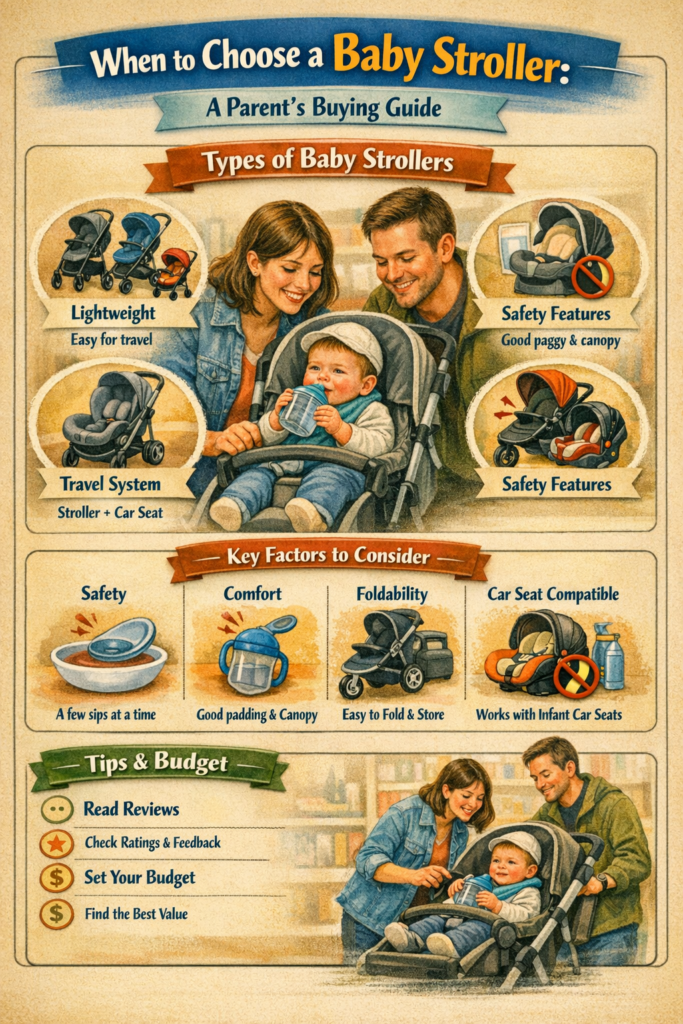
Use this breakdown to weigh the pros and cons of each major stroller category before making your final decision.
| Stroller Type | Best For | Pros | Cons | Price Range |
| Full-Size | Everyday neighborhood walks, primary use | Feature-rich, highly durable, large storage basket | Heavy, bulky to lift and store | Medium to High |
| Travel System | Newborns, frequent drivers | Seamless car-to-stroller transitions | Infant seat is outgrown quickly | High |
| Jogging | Active parents, rough terrain, running | Excellent suspension, all-terrain tires, smooth push | Heavy, wide footprint, not for newborns | Medium to High |
| Lightweight | Travel, quick errands, toddlers | Highly portable, easy to store, affordable | Minimal storage, fewer comfort features | Low to Medium |
| Double | Twins, growing families | Accommodates two children simultaneously | Very heavy, difficult to maneuver in crowds | High |
Essential Features to Evaluate
Once you have narrowed down the type of stroller you need, it is time to look at the specific features that will dictate your daily user experience.
Safety First: Harnesses and Brakes
Never compromise on safety. Look for a stroller with a five-point safety harness; this secures your child at the shoulders, hips, and between the legs, preventing them from climbing or falling out. Additionally, test the braking system. A flip-flop friendly, single-action foot brake that locks both rear wheels simultaneously is ideal for quick stops.
The Fold and Weight
You will fold and unfold this piece of equipment hundreds of times. Look for a stroller equipped with a true one-handed fold. You should be able to collapse the frame while securely holding your baby in your other arm. Check the actual weight of the stroller—lifting 25 pounds might not sound like much on paper, but lifting it into an SUV trunk while sleep-deprived is a different reality.
Storage Capacity and Add-Ons
Babies require an astonishing amount of gear. Inspect the under-seat basket. Can it easily fit your diaper bag? Is it accessible when the seat is fully reclined? Adequate storage is a game-changer for long days out. If you find a stroller you love but the basket is lacking, you can always check out premium baby and stroller accessories to add universal parent consoles, cup holders, and heavy-duty bag hooks to maximize your carrying capacity.
Wheels and Suspension
The quality of the wheels determines the quality of the push. Hard plastic wheels will rattle over every crack in the pavement. Rubber-coated wheels or foam-filled tires provide a much smoother ride and don’t run the risk of going flat. Good suspension systems—either on the front wheels or all four—absorb shock and keep your baby from getting jostled.
Real-World Testing: What to Look For
If you are shopping in person, do not just push an empty stroller across a smooth showroom floor. Put some weight in the seat (a heavy purse or backpack works perfectly) to simulate the weight of a child. Try to maneuver it with one hand. Kick the back of the stroller as you walk normally to ensure your stride doesn’t hit the rear axle. Adjust the canopy to check for smooth, quiet operation, and always ensure the handlebar height is comfortable for both you and your partner.
Frequently Asked Questions
What is the best age to stop using a stroller? Most children outgrow the need for a stroller between the ages of three and four, as their stamina for walking increases. However, families who visit theme parks or take long day trips often utilize lightweight umbrella strollers for children up to age five to prevent extreme fatigue.
Do I really need a bassinet stroller for a newborn? A bassinet is not strictly required, but it is highly recommended because newborns must lie completely flat to keep their airways open. If you do not purchase a bassinet attachment, ensure your stroller seat reclines fully to a flat position or is compatible with your infant car seat.
Can I use a jogging stroller for everyday use? Yes, many parents use jogging strollers as their primary everyday stroller due to their exceptional push and smooth ride. Just keep in mind that they are heavier to lift in and out of a car and have a wider wheelbase that can make navigating tight store aisles a bit tricky.
Are expensive strollers really worth the money? Higher-priced strollers generally offer better suspension, more durable materials, smoother maneuverability, and higher resale value. While you do not need a luxury model to keep your child safe, investing in a mid-to-high-tier stroller often pays off in daily ease of use and longevity if you plan to have multiple children.
How do I clean and maintain my baby stroller? Start by vacuuming crumbs and debris out of the seat crevices, then wipe down the frame with a damp cloth and mild soap. Many modern strollers feature removable, machine-washable seat fabrics; for those that don’t, spot clean with a gentle upholstery cleaner and air dry completely to prevent mold.