

A baby’s first smile is one of the most heart‑warming milestones for parents. It’s more than just a cute expression — it’s the beginning of emotional connection, communication, and social development. Understanding when babies start smiling and what those smiles mean helps you nurture their growth with confidence.

🍼 The Smiling Timeline
| Age Range | Type of Smile | What It Means |
|---|---|---|
| Birth–6 weeks | Reflex smiles | Involuntary; often occur during sleep or after feeding. |
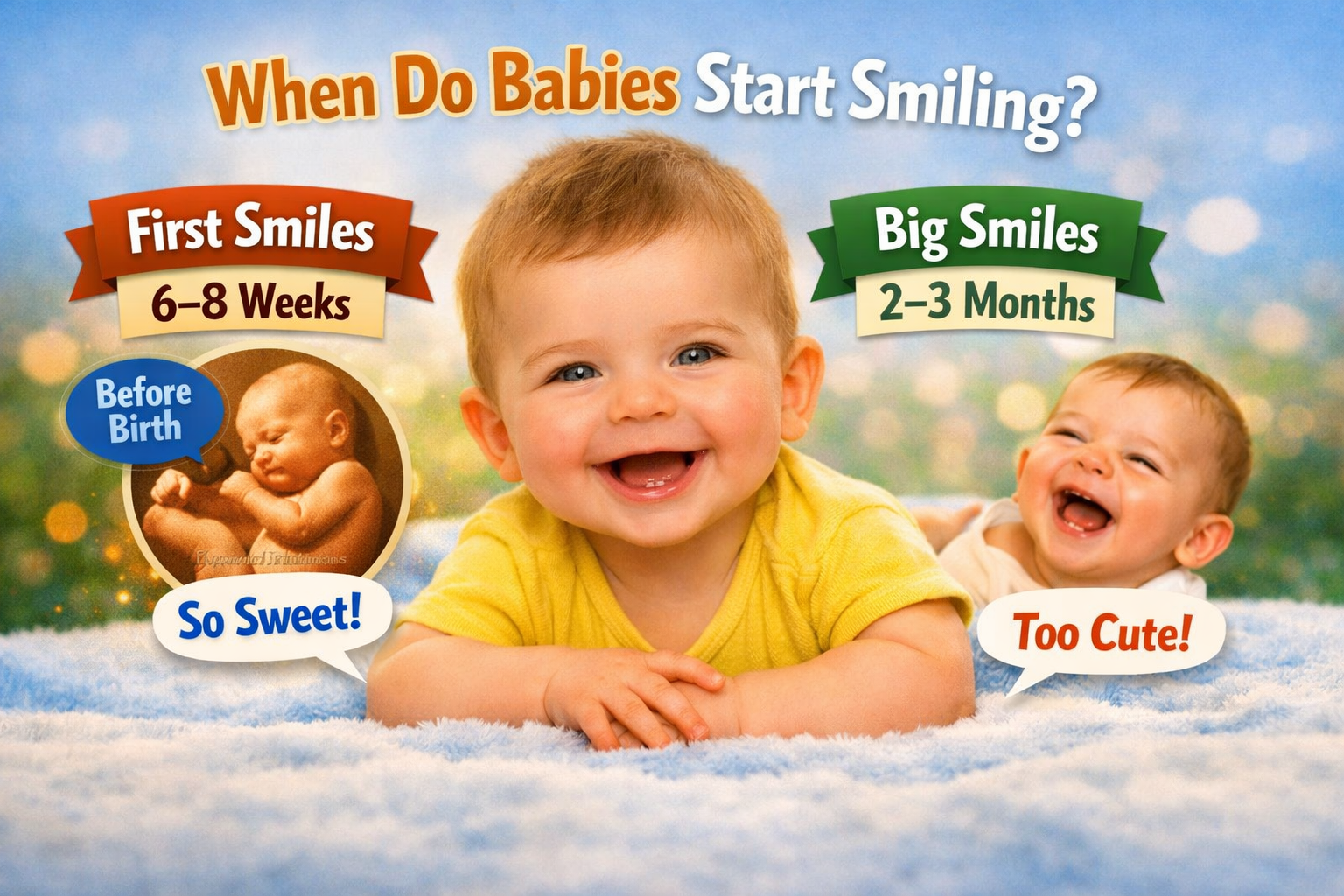
| 6–8 weeks | First social smiles | Baby smiles in response to voices, faces, or gentle interaction. |
| 2–3 months | Frequent social smiles | Baby begins to smile intentionally and recognizes caregivers. |
| 4–6 months | Laughing and expressive smiles | Baby laughs aloud and shows joy during play. |
| 6–12 months | Interactive smiles | Baby uses smiling to communicate excitement and affection. |
Fun fact: Ultrasound studies show that babies can smile reflexively even before birth — as early as 26 weeks of gestation.

💡 Why Smiling Matters
Smiling is a key indicator of your baby’s emotional and social development. It shows that they’re learning to connect, communicate, and express feelings.
- Bonding: Smiles strengthen the emotional bond between baby and caregiver.
- Brain development: Positive interactions stimulate neural pathways linked to empathy and communication.
- Emotional health: Early smiles reflect comfort, trust, and secure attachment.
- Social learning: Babies begin to understand facial expressions and emotional cues.
👶 How to Encourage Your Baby’s First Smile
- Make eye contact: Babies respond best to faces they recognize.
- Smile often: They imitate your expressions naturally.
- Talk and sing: Gentle voices and rhythmic sounds trigger joy.
- Play peek‑a‑boo: Simple games teach anticipation and delight.
- Provide calm surroundings: Overstimulation can delay social responses.
- Respond warmly: Reinforce their smiles with affection and praise.
🧠 Developmental Insights
Smiling is closely tied to vision and hearing development. As babies begin to focus on faces and recognize voices, they start responding emotionally. Around 2 months, they can distinguish familiar faces from strangers, which sparks those first genuine smiles.
By 4–6 months, laughter emerges — a sign that your baby is learning cause and effect (“Mom makes funny faces, I laugh!”).
⚠️ When to Talk to a Doctor
Every baby develops at their own pace, but consult your pediatrician if:
- Your baby isn’t smiling by 3 months.
- They seem unresponsive to faces or voices.
- They show limited eye contact or lack emotional reactions.
These signs don’t always mean something is wrong, but early evaluation helps rule out vision, hearing, or developmental concerns.
❓ FAQs
Q: Why do newborns smile in their sleep? A: Those are reflex smiles — involuntary muscle movements, not emotional responses.
Q: Can premature babies smile later than full‑term babies? A: Yes, milestones often align with their adjusted age (based on due date, not birth date).
Q: What if my baby smiles very early? A: Some babies show reflex smiles that look social, but true emotional smiles usually appear around 6–8 weeks.
Q: How can I tell a real smile from a reflex smile? A: Real smiles involve eye contact and occur in response to interaction, while reflex smiles happen randomly.
Q: Do babies smile at everyone? A: Initially, yes — but by 3–4 months, they reserve smiles for familiar faces.
Q: When do babies start laughing? A: Around 4 months, laughter becomes a natural extension of smiling.
Q: Can lack of smiling indicate autism? A: Not necessarily. While delayed social smiling can be one early sign, only a professional evaluation can determine developmental concerns.