


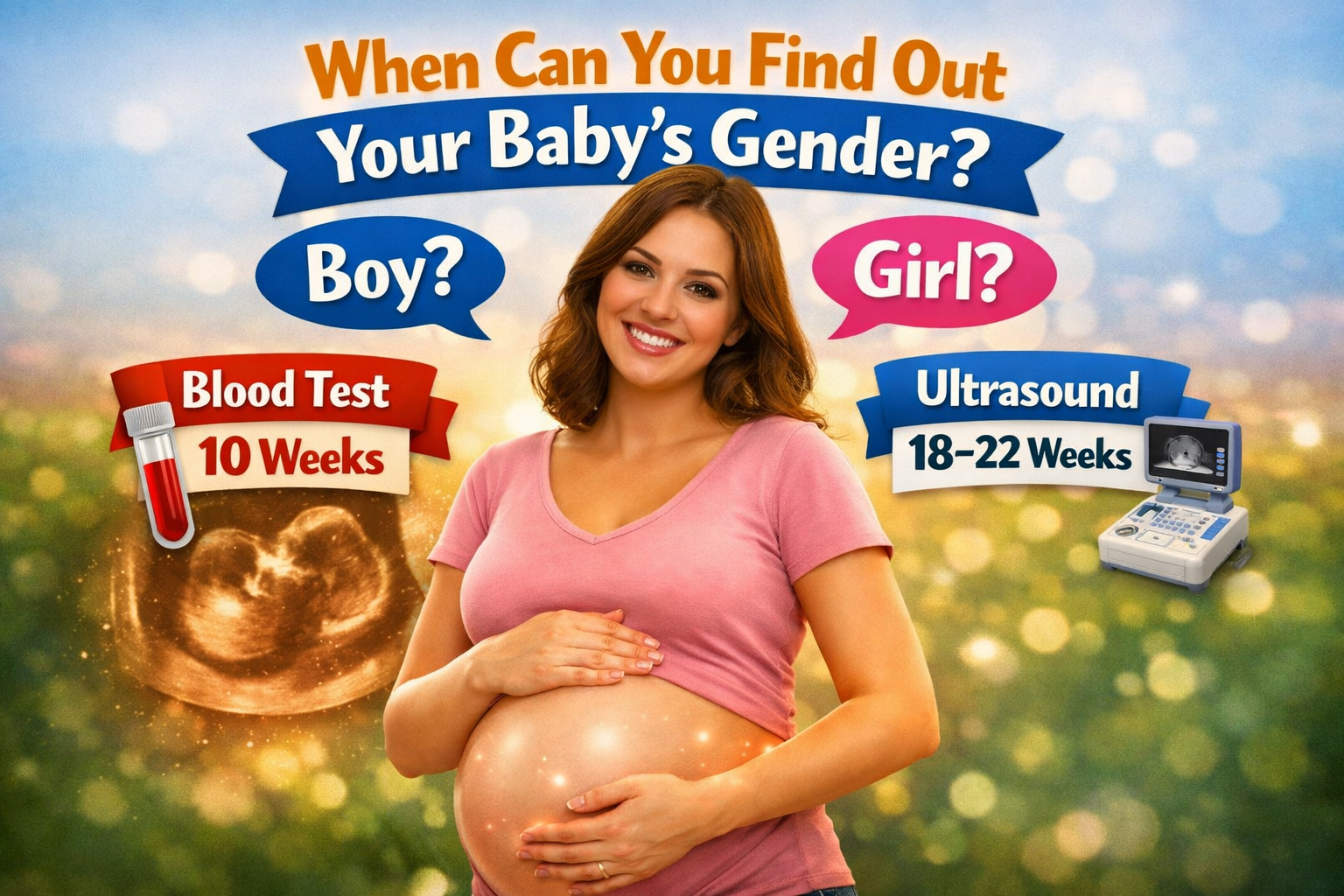
You can usually find out your baby’s gender between 18–22 weeks during the routine anatomy ultrasound, but modern blood tests can reveal it much earlier — as soon as 6–10 weeks with high accuracy.

🩺 Ways to Find Out Baby’s Gender
| Method | Earliest Time | Accuracy | Notes |
|---|---|---|---|
| At‑home blood test (SneakPeek, etc.) | 6–8 weeks | ~99% (claimed) | Detects Y‑chromosome DNA in your blood; risk of contamination if male DNA nearby. |
| Clinical blood test (NIPT) | 10 weeks | 99%+ | Screens for chromosomal conditions; gender info is a bonus. Safe and non‑invasive. |
| Ultrasound (early) | 14–16 weeks | 80–95% | Depends on baby’s position and technician skill. |
| Ultrasound (anatomy scan) | 18–22 weeks | 95–99% | Standard prenatal scan; most reliable visual confirmation. |
| Chorionic Villus Sampling (CVS) | 10–13 weeks | ~99% | Invasive; done for genetic testing, not just gender. |
| Amniocentesis | 15–20 weeks | ~99% | Also invasive; used for medical reasons. |
| IVF with Preimplantation Genetic Testing (PGT) | Before implantation | ~100% | Determines sex before pregnancy begins. |
🧬 How Gender Develops
- Week 7: Genital tubercle forms (same for all embryos).
- Week 9: Testosterone triggers penis growth if Y chromosome present.
- Weeks 11–12: Ovaries form if no Y chromosome.
- Week 14+: External genitalia become distinguishable.
- Week 20: Female fetuses already carry millions of immature eggs.
⚖️ Factors Affecting Accuracy
- Baby’s position: Legs crossed or facing away can obscure ultrasound view.
- Maternal body type: Higher BMI or scar tissue may reduce image clarity.
- Fetal DNA levels: Too low in early blood tests can cause inconclusive results.
- Equipment quality & technician experience: Affect ultrasound reliability.
🚫 Myths vs. Science
Old wives’ tales — like heartbeat speed, food cravings, bump shape, or Chinese gender charts — are not scientifically reliable. Studies show these methods are no better than random guesses. Only medical tests (blood or ultrasound) provide accurate results.
✅ Key Takeaways
- Earliest reliable method: NIPT blood test at 10 weeks (99% accuracy).
- Most common method: Anatomy ultrasound at 18–22 weeks (95–99% accuracy).
- Avoid myths: Gender prediction based on symptoms or belly shape isn’t evidence‑based.
- Confirm results: If you test early, verify later with an ultrasound for peace of mind.
❓ FAQs
Q: When is the earliest I can know my baby’s gender? A: Non‑invasive prenatal testing (NIPT) can reveal gender as early as 10 weeks with 99% accuracy.
Q: Can ultrasound show gender before 20 weeks? A: Yes. Some ultrasounds at 14–16 weeks can identify gender, but the most reliable scan is the 18–22 week anatomy ultrasound.
Q: Are at‑home blood tests accurate? A: Many claim 99% accuracy from 6–8 weeks, but contamination (male DNA nearby) can affect results.
Q: Do old wives’ tales predict gender? A: No. Myths like heartbeat speed, cravings, or bump shape are not scientifically reliable.
Q: What if my baby’s position hides the gender during ultrasound? A: The technician may ask you to return later or rely on another scan for confirmation.
Q: Can IVF or genetic testing determine gender before pregnancy? A: Yes. Preimplantation genetic testing (PGT) during IVF can identify sex before implantation.