



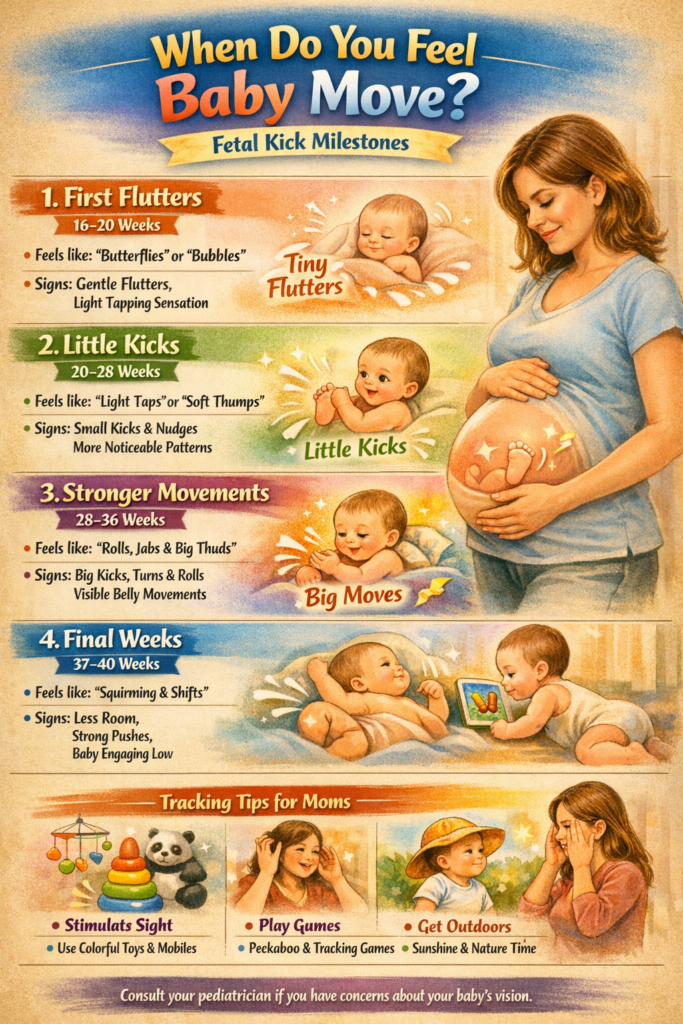
Most pregnant people feel their baby move for the first time between 16 and 24 weeks of pregnancy. This initial movement, known as quickening, often feels like faint flutters, gas bubbles, or butterfly wings. Second-time mothers usually notice these movements earlier than first-time mothers. By 28 weeks, these gentle flutters will transition into distinct, regular kicks, jabs, and rolls.
The moment you first feel your baby move is often described as one of the most magical and reassuring milestones of pregnancy. Before this point, you rely entirely on ultrasound screens and Doppler heartbeats to confirm your little one is thriving. But once those tiny flutters begin, the abstract concept of pregnancy suddenly transforms into a tangible, physical reality.
As you start preparing your nursery and gathering your essential baby care products, feeling those first kicks makes the journey incredibly real. However, the anticipation can also spark anxiety. If you are 18 weeks pregnant and haven’t felt a single nudge, it is entirely normal to wonder if everything is progressing correctly.
Understanding the timeline of fetal movement, recognizing what those early flutters actually feel like, and knowing how to track kicks in the third trimester will give you profound peace of mind. Let’s explore the biological mechanics of fetal movement, break down the week-by-week kick milestones, and outline exactly when you should contact your healthcare provider.
What Does the First Baby Movement Feel Like?
The medical term for a pregnant person’s first perception of fetal movement is quickening. Unlike the dramatic, visible belly kicks you will experience in the third trimester, quickening is incredibly subtle.
Because your baby is still very small and surrounded by a significant amount of amniotic fluid, their movements are muffled. Many first-time mothers completely miss these early signs, mistaking them for normal digestive processes. Women frequently describe quickening as feeling like:
- Butterflies fluttering lightly against the inside of the stomach.
- A goldfish swimming and grazing against a plastic bag.
- Popcorn popping in the lower abdomen.
- Tiny gas bubbles bursting or a mild, rumbling hunger pang.
- A gentle tapping or a muscle twitch deep within the pelvis.
It is only when these sensations happen repeatedly in the same specific area that most people realize they are actually feeling their baby.
Month-by-Month Fetal Kick Milestones
Your baby is actually moving long before you can feel them. The neurological pathways that govern motor control develop rapidly in the first trimester. By understanding their physical capabilities at each stage, you can better interpret the sensations in your abdomen.
Weeks 7 to 15: The Unfelt Gymnastics
Remarkably, your baby begins making spontaneous movements as early as 7 to 8 weeks gestation. Ultrasound technicians frequently observe these tiny embryos arching their backs, moving their developing limbs, and even hiccuping.
However, you will not feel any of this. The baby is less than a few inches long, weighs a fraction of an ounce, and is heavily cushioned by the amniotic sac and the thick muscular walls of your uterus. Their tiny developing muscles simply do not generate enough force to register against your uterine nerve endings.
Weeks 16 to 19: The First Flutters (Quickening)
This is the golden window for quickening. Your baby’s skeleton is hardening from soft cartilage to bone, giving their movements more weight and impact. They are actively flexing their arms and legs, rolling over, and touching their face.
If this is your second or third pregnancy, you are highly likely to feel movement during this window. Your uterine muscles have been stretched before, making them more sensitive, and you already know exactly what the subtle sensation of quickening feels like. First-time mothers might still be brushing these sensations off as a rumbling stomach.
Weeks 20 to 24: Establishing a Pattern
By the 20-week anatomy scan, your baby weighs roughly 10 ounces and is about the size of a banana. Their leg and arm movements are becoming stronger and more coordinated.
During these weeks, the movements transition from ambiguous flutters to undeniable taps and light kicks. You will likely begin to notice a pattern. Fetal activity is closely tied to your own routine and blood sugar levels. You might notice they become incredibly active right after you eat a meal, drink a cold glass of water, or when you finally lie down to rest in the evening. When you are walking or active during the day, the gentle rocking motion of your body often lulls the baby to sleep, which is why movement frequently peaks at night.
Weeks 25 to 28: Punches, Kicks, and Hiccups
Welcome to the active era. The amniotic fluid volume is peaking, providing your baby with the perfect aquatic gym. They still have plenty of room to execute full somersaults, and you will feel these dramatic positional shifts.
You may also start feeling fetal hiccups during this stage. Unlike the random, sporadic kicks, fetal hiccups feel like a highly rhythmic, repetitive tapping that can last anywhere from a few minutes to half an hour. Fetal hiccups are a wonderful sign of a healthy, maturing central nervous system as the baby practices swallowing amniotic fluid and exercising their diaphragm.
Weeks 29 to 32: Peak Activity
Your baby is growing rapidly, putting on significant fat stores, and running out of extra space. Because the quarters are getting cramped, the nature of the movements will change. The wild somersaults will be replaced by sharp, distinct jabs from elbows and knees.
You may even be able to see the movements from the outside. Your partner or family members should easily be able to feel the kicks by placing a hand firmly on your abdomen. This is also the stage where an unexpectedly sharp kick to the ribs or a sudden jab to the bladder or cervix might quite literally take your breath away.
Weeks 33 to 40: Rolls and Squirming
As you approach your due date, the baby will likely settle into a head-down (vertex) position, preparing for birth. Because they are tightly packed into the uterus, the sharp kicks will transition into large, rolling movements.
You will feel them stretching their legs against your ribs or shifting their back from one side of your abdomen to the other. You might visibly see an elbow or a heel drag slowly across your belly. While the type of movement changes, the frequency of the movement should not decrease.
Factors That Influence When You Feel Movement
If you are 22 weeks pregnant and still haven’t felt a definitive kick, do not panic. Every pregnancy is biologically unique, and several physiological factors dictate when and how strongly you will perceive fetal movement.
Placenta Placement (Anterior vs. Posterior)
This is the most common reason for delayed quickening. Your placenta is a thick, highly vascular pancake-like organ that nourishes the baby.
- Posterior Placenta: The placenta attaches to the back wall of the uterus (closest to your spine). The baby is positioned directly against the front of your belly, meaning you will feel their kicks very clearly and early on.
- Anterior Placenta: The placenta attaches to the front wall of your uterus, directly between the baby and the skin of your stomach. In this scenario, the thick placenta acts as a massive shock absorber, cushioning the baby’s blows. Women with anterior placentas often do not feel distinct movement until 22 to 24 weeks.
Maternal Weight and Body Composition
The amount of adipose (fat) tissue on the abdominal wall can affect how easily movement is felt from the outside, and sometimes from the inside. A thicker abdominal wall provides more padding, which can slightly delay the perception of those very early, gentle flutters.
Fetal Position
If your baby is facing your spine (an occiput anterior position), their punches and kicks are directed toward your back and internal organs, which have fewer nerve endings than the front of your abdominal wall. You might feel more pressure in your lower back rather than distinct kicks in the front.
How to Track Fetal Movements (Kick Counts)
Once you reach the third trimester (around 28 weeks), your healthcare provider will likely ask you to start monitoring your baby’s movements daily. This is known as performing “kick counts.”
Why Kick Counts Matter:
A baby’s movement is the most direct indicator of their well-being. A healthy, well-oxygenated baby is an active baby. If a baby is experiencing distress, low amniotic fluid, or reduced oxygen flow from the placenta, they will instinctively conserve energy by stopping unnecessary movements. Tracking kicks allows you to catch this early warning sign and seek immediate medical intervention.
How to Perform a Kick Count Properly:
- Choose the Right Time: Pick a time of day when your baby is usually most active (often after dinner or right before bed).
- Get Comfortable: Empty your bladder, drink a cold glass of water or eat a small snack, and lie down on your left side. Lying on your left side maximizes blood flow to the uterus.
- Count the Movements: Focus entirely on the baby. Count every distinct movement—a kick, a roll, a jab, or a flutter. (Do not count hiccups, as they are involuntary reflexes).
- The Goal: You are looking to feel 10 distinct movements within a 2-hour window.
Most healthy babies will achieve 10 movements in less than 30 minutes. If you reach 10 movements quickly, you are done for the day. Whether you are tracking movements on the couch or organizing your new premium baby gear and accessories, staying attuned to your body is essential for a safe third trimester.
Normal vs. Abnormal Fetal Movement
Use this table to understand how to interpret your daily kick count sessions and when to take action.
| Fetal Movement Scenario | Interpretation | Recommended Action |
| 10 movements in under 2 hours. | Normal, healthy baseline. | Continue tracking at the same time tomorrow. |
| Movements feel more like “rolling” than sharp kicks (35+ weeks). | Normal. The baby is running out of room to kick but is still actively shifting. | Continue standard daily kick counts. |
| Fewer than 10 movements in 2 hours. | Potential sign of fetal distress or simply a deep sleep cycle. | Drink ice water, eat something sweet, and try counting for one more hour. If still under 10, call your doctor immediately. |
| A sudden, drastic decrease in normal activity. | Potential sign of reduced oxygen or placental issues. | Do not wait until the next day. Go to labor and delivery or call your OBGYN immediately for monitoring. |
| Frantic, wild, or non-stop thrashing movement. | Rare, but can sometimes indicate acute distress or cord compression. | Contact your healthcare provider for guidance and reassurance. |
Encouraging Your Baby to Move
There will be moments during your pregnancy when you simply want reassurance. If you haven’t felt the baby move in a little while and want to prompt a response, you can try a few harmless techniques to wake them up.
First, drink a glass of ice-cold water. The sudden temperature drop in your stomach, which rests directly against the uterus, often startles the baby enough to provoke a kick. Alternatively, eat a small snack containing natural sugars, like an apple or a glass of orange juice. The spike in your blood glucose levels will cross the placenta and give the baby a burst of energy. Finally, try changing positions. If you have been standing, lie down. If you have been lying down, get up and walk around. Gently shining a flashlight against your bare stomach or playing loud music can also stimulate their developing senses and prompt a physical reaction.
For more support throughout your pregnancy and parenthood journey, explore the resources available within the Wobblebee community, where you can connect with other parents experiencing the exact same milestones.
Frequently Asked Questions
What does quickening feel like?
Quickening, the first sensation of fetal movement, is very subtle. It is commonly described as feeling like faint butterflies fluttering, gas bubbles popping, or a light tapping sensation in the lower abdomen.
Why do I feel my baby move lower down?
In the second trimester, the baby is still relatively small and frequently settles low in the pelvis. If your baby is in a breech position (feet pointing down), you will primarily feel their strongest kicks directed toward your cervix and bladder.
Does an anterior placenta mean I will feel fewer kicks?
An anterior placenta acts as a thick cushion between your baby and the front of your stomach. While you won’t necessarily feel fewer kicks overall, it will likely take you a few extra weeks to feel the movements clearly, and the kicks may feel more muffled from the outside.
Should I worry if my baby has quiet days?
In the second trimester, it is normal for movement to be erratic; you might feel them constantly one day and barely the next. However, once you reach 28 weeks, your baby should establish a consistent pattern, and any noticeable “quiet days” or decreased movement should be evaluated by a doctor immediately.
How many kicks should I feel in an hour?
Medical guidelines generally recommend looking for 10 distinct movements (kicks, jabs, or rolls) within a 2-hour window when you are actively focusing on kick counts. Many babies will hit this 10-kick milestone in less than 30 minutes when they are awake and active.