


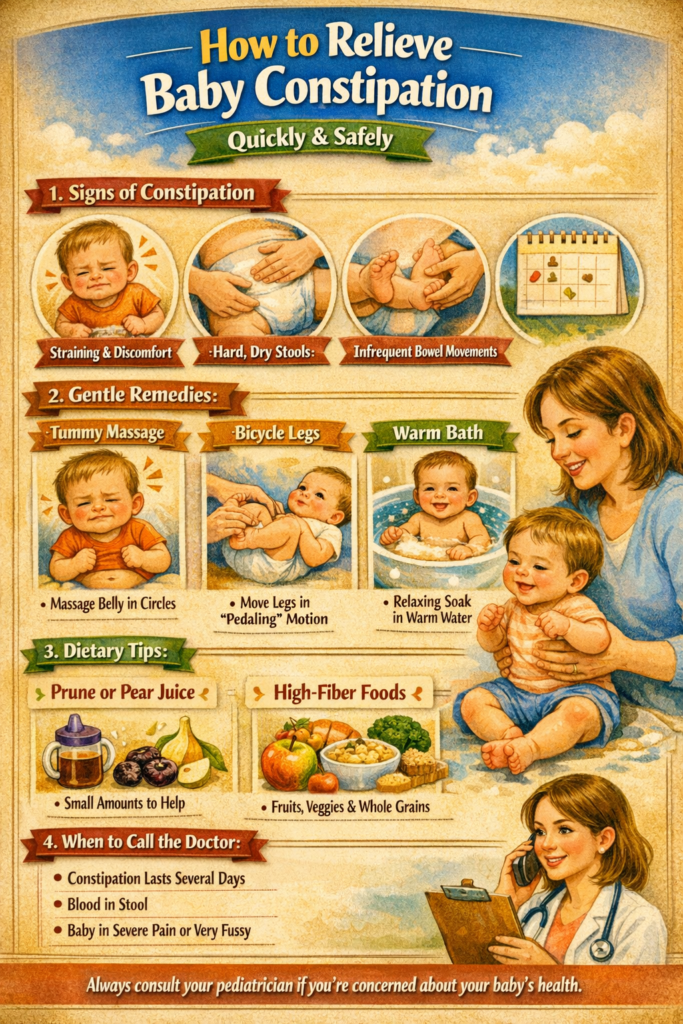
To relieve baby constipation quickly, lay your infant on their back and gently move their legs in a bicycle motion to stimulate the bowels. A warm bath can also relax their abdominal muscles. For babies over six months, offering one to two ounces of diluted 100% prune or apple juice can safely soften stools and promote a bowel movement.
Watching your little one strain, cry, and become visibly uncomfortable due to constipation is incredibly distressing for any parent. When your baby is in pain, your immediate instinct is to fix it as fast as humanly possible. However, treating infant digestive issues requires a delicate, highly informed approach. Their gastrointestinal tracts are immature, rapidly developing, and highly sensitive to sudden changes in diet or physical intervention.
Before rushing to the pharmacy, it is critical to understand that true infant constipation is rarely an emergency, and it can usually be resolved with simple, safe, at-home methods. What works for an adult or a toddler is often dangerous for a newborn.
This comprehensive guide will break down the biological mechanics of your baby’s digestive system, help you differentiate between normal infant straining and actual constipation, and provide you with a detailed, pediatrician-backed toolkit for providing rapid, safe relief.
The Anatomy of Infant Digestion
To understand how to fix baby constipation, you first must understand how a baby’s digestive system operates. When a child is born, their gastrointestinal (GI) tract is completely sterile. Over the first few weeks and months of life, a complex microbiome of bacteria begins to colonize their gut, primarily dictated by whether they are consuming breast milk or infant formula.
The Myth of Daily Bowel Movements
One of the most common reasons parents panic about constipation is a fundamental misunderstanding of normal infant bowel frequency. Frequency is not the primary indicator of constipation in babies; consistency is.
Exclusively breastfed babies are incredibly efficient at absorbing the nutrients in breast milk. Because breast milk is practically custom-made for the infant’s body, there is very little waste left over to form a stool. It is entirely normal for a breastfed baby over the age of six weeks to go five, seven, or even ten days without passing a bowel movement. As long as the baby is gaining weight, producing plenty of wet diapers, and the eventual stool is soft and mustard-like, they are not constipated.
Formula-fed babies, on the other hand, typically have more frequent bowel movements—usually at least once a day or every other day. Formula is slightly harder for the infant gut to break down, resulting in more waste. Their stools are naturally firmer and darker than those of breastfed babies.
Infant Dyschezia vs. True Constipation
If your baby is grunting, turning bright red in the face, crying, and straining heavily to poop, you might immediately assume they are severely constipated. However, if the stool they eventually pass is soft, they are likely experiencing infant dyschezia.
Infant dyschezia is a condition of muscle uncoordination. To pass a stool, a baby must do two things simultaneously: push with their abdominal muscles and relax their pelvic floor sphincter. Newborns simply do not know how to coordinate these two actions yet. They push with all their might but accidentally clench their sphincter shut, leading to screaming and frustration. This is a normal developmental phase that they will naturally outgrow as their nervous system matures, and it requires absolutely no medical intervention.
True constipation is defined exclusively by the physical characteristics of the stool. If your baby’s stool looks like hard, dry, distinct pebbles or marbles, they are constipated.
Common Triggers for Baby Constipation
Constipation rarely happens without a catalyst. By identifying the root cause, you can tailor your relief strategy more effectively.
1. The Transition to Solid Foods
The most common trigger for infant constipation occurs around the six-month mark when parents introduce solid foods. Moving from an entirely liquid diet to complex purees is a massive shock to the baby’s GI tract. Rice cereal, a traditional first food, is particularly notorious for causing severe constipation because it is highly processed, lacks dietary fiber, and absorbs a significant amount of water in the gut.
2. Formula Changes
Switching from breast milk to formula, or changing from one brand of formula to another, can easily disrupt the delicate balance of bacteria in the baby’s gut. Certain formulas contain higher levels of iron or specific milk proteins that take the digestive system longer to process, leading to a backup of hard stool.
3. Dehydration
Water is the essential lubricant of the digestive system. If a baby is fighting off a minor illness, experiencing a fever, or simply not eating as much due to teething pain, they can quickly become mildly dehydrated. When the body lacks fluids, the colon responds by absorbing as much water as possible from the waste material, resulting in dry, painfully hard stools.
4. Travel and Routine Disruption
Babies are creatures of habit. Traveling, changing sleep schedules, or experiencing high-stress environments can trigger a physical “withholding” response. The psychological stress of a disrupted routine can literally cause their digestive tract to slow down.
Safe, Fast, and Effective Physical Interventions
When you identify hard, pebble-like stools, your first course of action should be physical stimulation. These methods encourage the bowel to contract and push the hardened stool through the colon safely.
The Bicycle Legs Exercise
This is the fastest, safest, and most effective physical remedy for a constipated baby.
- Lay your baby flat on their back on a comfortable surface.
- Gently grasp their calves or ankles.
- Push one leg up so the knee gently presses against the side of their abdomen, holding it there for a few seconds.
- Release the leg and repeat with the opposite leg.
- Continue this pedaling motion for 3 to 5 minutes.
The physical pressure of the knee against the abdomen acts as a deep tissue massage for the colon, actively moving trapped gas bubbles and physically stimulating peristalsis (the wave-like muscle contractions of the digestive tract).
The “I Love U” Tummy Massage
Baby massage is a powerful tool for digestive relief. Using a few drops of natural baby oil or lotion, you can trace the path of the large intestine to help manually move the stool.
- “I”: Stroke your fingers down the left side of the baby’s belly (your right side when facing them). This follows the descending colon.
- “L”: Stroke across the top of the belly from right to left, then down the left side, forming an upside-down “L”. This follows the transverse and descending colon.
- “U”: Stroke up the right side of the belly, across the top, and down the left side, forming an upside-down “U”. This follows the entire path of the ascending, transverse, and descending colon.
Perform this gentle but firm massage for 10 to 15 minutes, ideally after a warm bath when the baby’s muscles are most relaxed. Keeping high-quality gentle infant care and wellness tools stocked in your nursery allows you to perform these soothing routines seamlessly.
The Warm Bath Muscle Relaxant
A warm bath is a natural antispasmodic. When a baby is constipated, they often clench their pelvic and abdominal muscles out of discomfort, which only exacerbates the problem by trapping the stool. Submerging their lower body in a comfortably warm bath instantly relaxes the surrounding musculature. It is highly common for a baby to finally have a bowel movement while in the warm water, so be prepared to clean the tub!
Dietary Interventions for Fast Relief
If physical stimulation is not producing results, you must address the contents of the digestive tract directly. The approach you take depends entirely on the age of your infant.
For Babies Under 6 Months (Liquid Diet Only)
If your baby is exclusively breastfeeding or formula-feeding and has not yet started solids, your options are limited, but effective.
Do not give water to a baby under six months old. Giving plain water to young infants can lead to a dangerous condition called oral water intoxication, which causes seizures. Instead, focus on their milk intake. If you are formula-feeding, double-check that you are measuring the powder correctly. A formula mixed with too much powder and not enough water is a massive trigger for severe constipation.
If the constipation persists, consult your pediatrician. They may recommend adding a minuscule amount of 100% prune or apple juice (typically no more than 1 ounce per month of life, capped at 4 ounces) to their formula bottle. The sugars in these juices draw fluid into the intestines, softening the stool. Never introduce juice to an infant without explicit medical approval.
For Babies Over 6 Months (Starting Solids)
Once your baby is eating solid foods, you have a much wider arsenal of dietary tools to combat constipation.
Embrace the “P” Fruits:
Pears, plums, peaches, and prunes are incredibly rich in sorbitol, a naturally occurring sugar alcohol that the body digests very slowly. As sorbitol sits in the colon, it acts as an osmotic laxative, drawing large amounts of water into the bowel to soften the hard stool. Serving these high-fiber purees in ergonomic high chairs and feeding accessories can make mealtime more enjoyable and highly effective for their digestion.
Hydration is Key:
Once a baby hits the six-month mark and begins consuming purees, their need for supplemental hydration increases. You can safely offer 4 to 8 ounces of water per day in a sippy cup. This extra fluid helps process the new, complex solid foods and keeps the stool soft and manageable.
Foods to Temporarily Pause:
If your baby is actively constipated, immediately remove the BRAT diet foods from their rotation. Bananas, Rice cereal, Applesauce, and Toast are traditionally given to stop diarrhea because they are highly binding. Feeding a constipated baby a large bowl of rice cereal and bananas is a recipe for a painful intestinal blockage. Swap rice cereal out for high-fiber oatmeal or barley cereal instead.
Remedies to Strictly Avoid
When dealing with a screaming, uncomfortable child, desperation can lead to poor decisions. The internet is filled with outdated, dangerous advice regarding infant digestion. You must strictly avoid the following “remedies”:
- Karo Syrup (Corn Syrup): Decades ago, doctors recommended putting Karo syrup in baby bottles to cure constipation. This is now highly discouraged. Dark corn syrups can contain the spores that cause infant botulism, a rare but life-threatening neuroparalytic illness. Furthermore, modern Karo syrup lacks the specific chemical structure that previously made it act as a laxative.
- Mineral Oil: Giving an infant mineral oil can lead to severe aspiration pneumonia if they accidentally inhale the oil into their lungs while swallowing.
- Adult Laxatives or Suppositories: Never use over-the-counter laxatives, enemas, or glycerin suppositories without direct supervision and precise dosing instructions from a board-certified pediatrician. These can cause severe dehydration and dependency in a young baby.
- Thermometer Stimulation: Using a rectal thermometer or a cotton swab to manually stretch the baby’s sphincter can cause micro-tears in the delicate rectal tissue, leading to bleeding, painful scarring, and a psychological fear of pooping.
When to Call the Pediatrician
While home remedies are highly effective for routine dietary backups, certain symptoms require immediate professional medical evaluation. You should contact your pediatrician or seek urgent care if you observe any of the following red flags:
- Blood in the Stool: If you see bright red streaks of blood on the outside of the hard stool, it usually indicates an anal fissure (a tiny tear in the skin caused by stretching). While common, it needs to be evaluated. If the stool is dark, black, or tarry, seek emergency care immediately.
- Vomiting: If the constipation is accompanied by forceful vomiting, particularly if the vomit is green or yellow (bile), it could indicate a serious, life-threatening intestinal blockage.
- Refusal to Eat: A constipated baby might eat slightly less, but if they are completely refusing the breast or bottle for multiple consecutive feedings, they require medical assessment for dehydration.
- Swollen, Rigid Abdomen: If your baby’s stomach feels hard, distended, and highly sensitive to light touch, it is a sign of severe gas buildup or a potential obstruction.
- No Relief After Several Days: If you have aggressively implemented dietary changes, warm baths, and massages for 48 to 72 hours and the baby is still passing dry, painful pebbles, it is time to consult a doctor for prescription-grade relief options.
Constipation vs. Normal Digestion: A Quick Guide
Use this comparative table to quickly assess whether your baby’s symptoms warrant intervention or just patience.
| Symptom / Behavior | Normal Infant Digestion | Infant Constipation |
| Stool Frequency (Breastfed) | Varies widely; 5+ times a day to once every 7-10 days. | Frequency is irrelevant; focus on stool texture. |
| Stool Frequency (Formula) | Typically 1 to 2 times a day. | Noticeable, sudden decrease from their normal baseline. |
| Stool Consistency | Soft, pasty, mustard-like, or similar to peanut butter. | Hard, dry, distinct pebbles or marbles; visibly dry. |
| Physical Demeanor | Grunting, turning red, and straining (infant dyschezia). | Arching back, crying out in sharp pain specifically while passing a stool. |
| Abdominal Feel | Soft, squishy, and comfortable to the touch. | Firm, tight, swollen, or sensitive to pressure. |
| Appetite | Eating normally with regular hunger cues. | Noticeable decrease in appetite; pulling away from the bottle. |
Managing your baby’s digestive health is one of the most hands-on aspects of early parenthood. By familiarizing yourself with the signs of true constipation, utilizing safe physical massage techniques, and adjusting their diet strategically, you can help them navigate these uncomfortable hurdles quickly. For more guidance and shared experiences, connecting with other parents through the Wobblebee community can provide invaluable emotional support and expert-backed tips during these stressful moments.
Frequently Asked Questions
Can I give my 2-month-old water for constipation?
No. You should never give plain water to a baby under six months of age. Their kidneys are too immature to process plain water, which can lead to a dangerous condition called water intoxication. Always consult a pediatrician before offering anything other than breast milk or formula.
Does rice cereal cause baby constipation?
Yes, rice cereal is a very common cause of infant constipation. It is highly refined, lacks dietary fiber, and acts as a binding agent in the gut. If your baby is constipated, swap rice cereal for high-fiber alternatives like infant oatmeal or barley cereal.
How long can a breastfed baby go without pooping?
Exclusively breastfed babies (over six weeks of age) can frequently go up to a week, or sometimes even 10 days, without a bowel movement. Because breast milk is so easily absorbed, there is very little waste. As long as the eventual stool is soft, this is perfectly normal.
What is the “bicycle legs” technique?
The bicycle legs technique involves laying the baby on their back and gently pedaling their legs back and forth toward their stomach. This gentle physical pressure acts as a massage for the colon, helping to move trapped gas and stimulate a bowel movement.
Are glycerin suppositories safe for babies?
Glycerin suppositories should only be used as a last resort and strictly under the explicit guidance of a pediatrician. Frequent use can cause the baby’s bowel to become dependent on the chemical stimulation, worsening the constipation over the long term.