


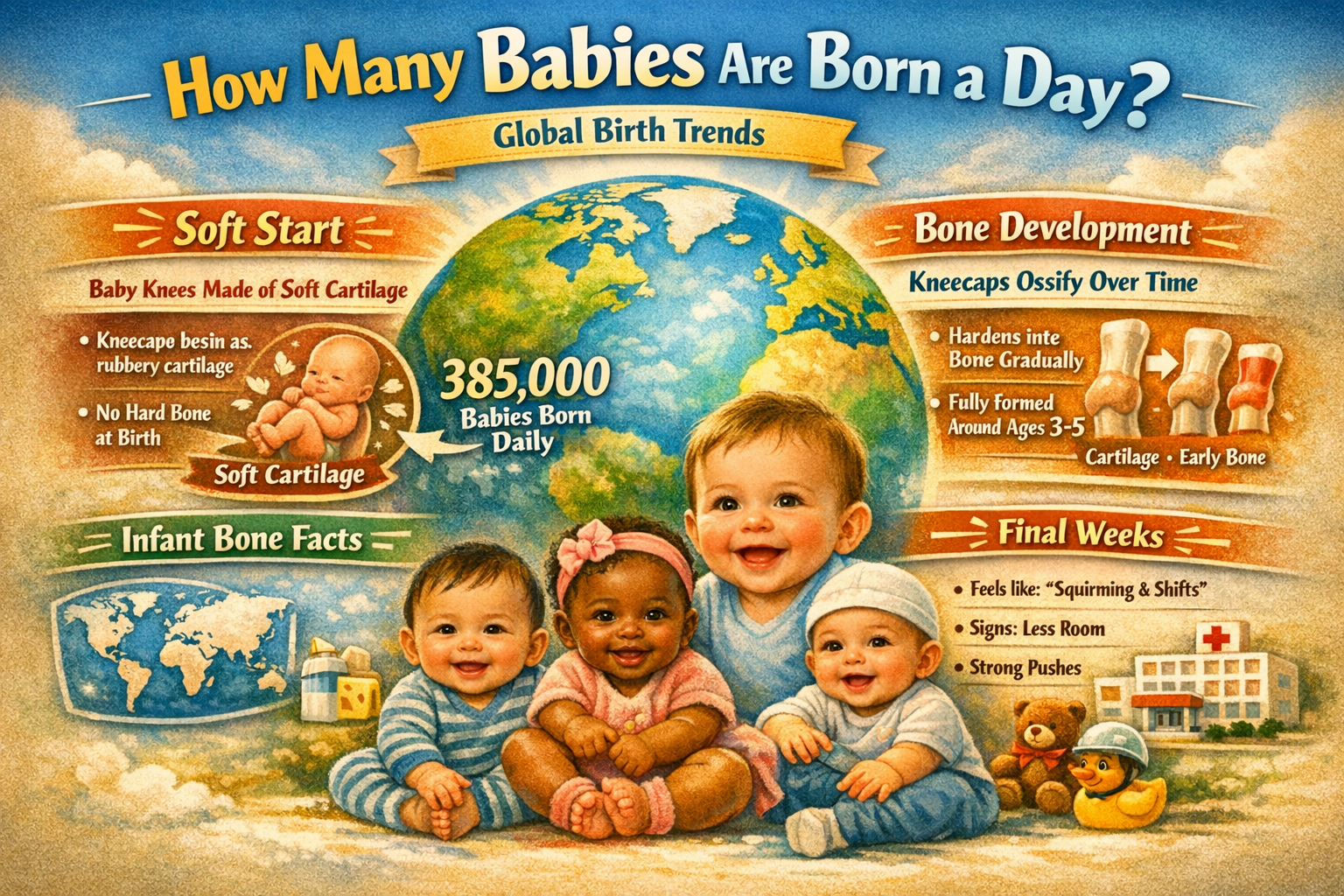
Globally, approximately 385,000 babies are born every single day. This staggering number breaks down to roughly 267 births per minute and 4.5 births every single second. While the overall human population continues to expand, these daily births are not distributed evenly across the globe. Developing nations account for the vast majority of new births, while many fully industrialized nations are experiencing rapid demographic declines.
The sheer scale of human reproduction is a fascinating subject that touches on economics, sociology, healthcare, and global sustainability. Every single second, multiple families are welcoming a new life into the world, navigating those sleep-deprived first days, and dreaming about their child’s future.
Whether you are a data enthusiast analyzing demographic shifts, a student of global health, or an expectant parent currently curating your essential baby care products as you prepare for your own little one to join this daily statistic, understanding the math behind global birth rates offers incredible perspective. Let’s break down the exact numbers, explore which countries are growing the fastest, and analyze the complex factors driving modern population trends.
The Staggering Math of Global Births 2026

To truly grasp the magnitude of human population growth, it helps to break the massive annual figures down into smaller, more comprehensible units of time. The United Nations Department of Economic and Social Affairs continuously tracks global population metrics, providing the most accurate estimates available.
Currently, the world sees roughly 140 million births per year. When we divide that massive figure, the daily reality becomes astonishing:
- Births per day: ~385,000
- Births per hour: ~16,000
- Births per minute: ~267
- Births per second: ~4.5
It is important to note that while 385,000 babies are born daily, the global population does not increase by that exact number. We must factor in the global mortality rate. Currently, approximately 165,000 people pass away each day. By subtracting the daily deaths from the daily births, we arrive at the net population growth: the Earth gains roughly 220,000 new inhabitants every 24 hours.
Where Are the Most Babies Being Born?
The 385,000 babies born today are entering vastly different realities depending on their geographic location. Global birth rates are incredibly asymmetrical. The demographic center of gravity is rapidly shifting away from the West and toward the African continent and parts of Southern Asia.
The Surge in Sub-Saharan Africa
Sub-Saharan Africa is currently the undisputed engine of global population growth. Countries within this region boast the highest Total Fertility Rates (TFR) on the planet. TFR is a critical demographic metric that represents the average number of children a woman would have over her lifetime given current birth rates.
To maintain a stable population without relying on immigration, a country needs a replacement-level fertility rate of exactly 2.1. Many Sub-Saharan nations have a TFR exceeding 5.0. For instance, Niger consistently reports a staggering fertility rate of nearly 6.7 children per woman. This exponential growth is driven by several overlapping factors, including high infant mortality rates (which historically prompt families to have more children), deeply rooted cultural emphasis on large family sizes, and heavily limited access to modern family planning resources.
The Stabilization of Asia
Asia presents a deeply divided demographic picture. Historically the massive driver of global population (home to giants like India and China), the continent is undergoing a massive shift. India recently surpassed China as the world’s most populous country, largely because China’s birth rate has plummeted following decades of the strict one-child policy and subsequent economic pressures. Today, major Asian economies like Japan, South Korea, and China are facing severe demographic crises, characterized by plunging birth rates and rapidly aging populations.
Factors Driving the Decline in Industrialized Nations
While developing regions boom, almost all of Europe, North America, and parts of East Asia are experiencing a “baby bust.” The birth rates in these regions have fallen well below the 2.1 replacement level. This widespread decline is not an accident; it is the highly predictable result of rapid economic development and urbanization.
Education and Female Empowerment
The single most reliable demographic indicator in the world is the education level of women. As female populations gain access to secondary and tertiary education, birth rates universally decline. Educated women are significantly more likely to enter the workforce, build established careers, and voluntarily delay marriage and childbirth. This delay naturally shortens their prime reproductive window, resulting in fewer children per family.
The Crushing Cost of Modern Parenthood
Raising a child in a fully developed, modern economy requires a monumental financial investment. From exorbitant healthcare costs and premium childcare to the soaring price of housing and education, the economic burden of parenthood has never been higher.
Modern parents are acutely aware of these costs. Before welcoming a child, families are carefully calculating budgets, securing larger homes, and investing in durable, premium nursery gear and accessories that will last. The high cost of living, coupled with stagnant wages in many developed nations, heavily incentivizes couples to have only one or two children, or to forgo parenthood entirely.
Urbanization and Changing Lifestyles
The shift from agrarian societies to hyper-urbanized cities has fundamentally altered the family dynamic. In a farming community, a large family represents essential labor and economic security. In a cramped, high-cost metropolitan apartment, a large family represents a massive financial strain and logistical nightmare. Urban environments naturally foster smaller family units.
Understanding Total Fertility Rate (TFR)
To understand exactly how vastly different regions approach childbirth, we can look at the Total Fertility Rate. The table below highlights the extreme demographic polarization happening across the globe right now.
| Country / Region | Total Fertility Rate (TFR) | Demographic Status | Primary Influencing Factors |
| Niger | 6.7 | Explosive Growth | High infant mortality, lack of family planning, rural agrarian economy. |
| Somalia | 5.5 | Rapid Growth | Cultural norms favoring large families, limited female workforce participation. |
| India | 2.0 | Stabilizing | Increased urbanization, rising education levels, economic development. |
| United States | 1.6 | Below Replacement | High cost of childcare, delayed marriage, focus on career advancement. |
| Japan | 1.3 | Severe Decline | Extreme work culture, high cost of living, shifting social priorities. |
| South Korea | 0.8 | Critical Crisis | Staggering housing costs, hyper-competitive education system. |
This table clearly illustrates the massive divide. While a country like Niger is expanding rapidly, South Korea holds the record for the lowest fertility rate in recorded human history, prompting massive government panic and economic restructuring to prepare for a shrinking workforce.
What This Means for the Future
The massive daily influx of 385,000 newborns carries profound implications for the future of our planet. Demographers predict that the global population will peak at roughly 10.4 billion people somewhere around the year 2080, after which it will likely plateau and eventually begin to shrink.
This shift will require massive global adaptation. Nations with booming youth populations, primarily in Africa, will need to generate millions of jobs and drastically expand infrastructure, schooling, and healthcare to harness their demographic dividend. Conversely, aging nations in the West and East Asia will be forced to restructure their economies, adapt their healthcare systems for elderly care, and likely increase immigration quotas to maintain a viable workforce.
The macro-level statistics are staggering, but at the center of every single one of those 385,000 daily births is a family experiencing a profound, life-altering moment. For those embarking on this journey, connecting with supportive networks and finding reliable resources through the Wobblebee parenting community can help make navigating the massive transition to parenthood feel just a little bit smaller and much more manageable.
Frequently Asked Questions
How many babies are born in the US every day?
In the United States, roughly 10,000 babies are born each day. This totals approximately 3.6 million births annually, though the U.S. birth rate has been steadily declining over the past decade.
Are more boys or girls born each day?
Globally, the natural biological sex ratio at birth leans slightly toward males. For every 100 girls born, there are approximately 105 boys born. This slight biological advantage helps offset the fact that males historically have slightly higher infant mortality rates.
What country has the highest birth rate?
Niger consistently ranks as the country with the highest birth rate in the world. Women in Niger have an average of nearly 6.7 children over their lifetime, driving massive and rapid population growth in the region.
When will the global population stop growing?
According to the United Nations, the global population is projected to reach its peak of approximately 10.4 billion people around the 2080s. After reaching this peak, demographic models suggest the population will plateau and eventually begin a slow decline.
Why are birth rates dropping in developed countries?
Birth rates in developed nations are falling due to a complex mix of socio-economic factors. The primary drivers include increased access to education and career opportunities for women, the high financial cost of housing and childcare, widespread access to contraception, and the cultural shift of delaying marriage and parenthood.