


No Grinder? No Problem: 7 Genius Ways to Grind Coffee Beans at Home
Nothing beats the aroma of freshly ground coffee, but what happens when your grinder gives out or you’re brewing away from home? Don’t settle for stale pre-ground beans just yet.
While a dedicated burr grinder is the gold standard, you can achieve a surprisingly great brew using common kitchen tools. In this guide, we’ll explore the best DIY methods to unlock those rich flavors, even without a machine.
The Best DIY Coffee Grinding Methods
1. The Blender or Food Processor (Fastest)
The most common alternative is the blender. Because blenders use blades (similar to cheap blade grinders), they are efficient but can be inconsistent.
- The Technique: Use the “Pulse” setting. High-speed, continuous blending creates heat that can “cook” the oils in the beans, ruining the flavor.
- Pro Tip: Shake the blender between pulses to ensure all beans hit the blades for a more uniform consistency.
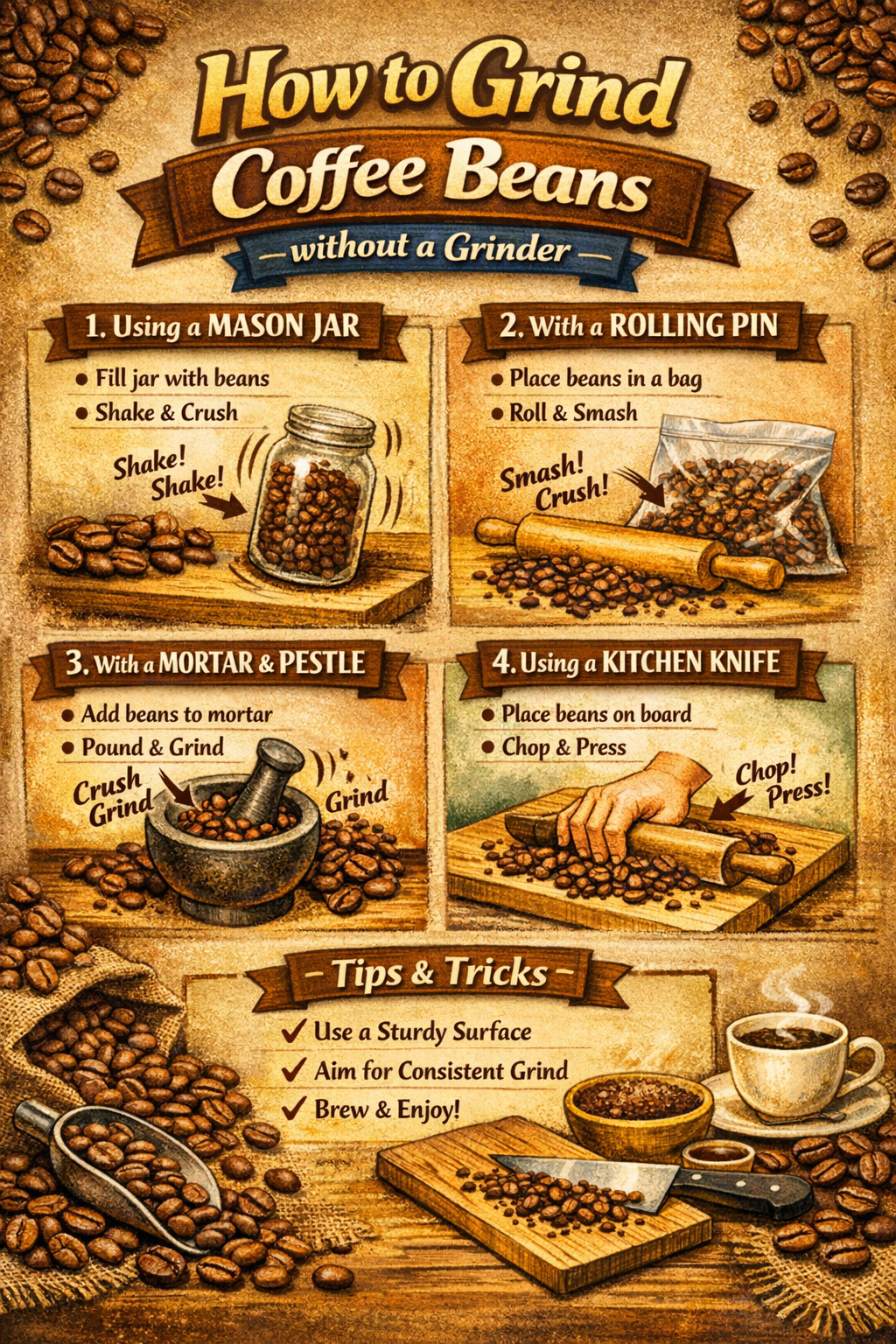
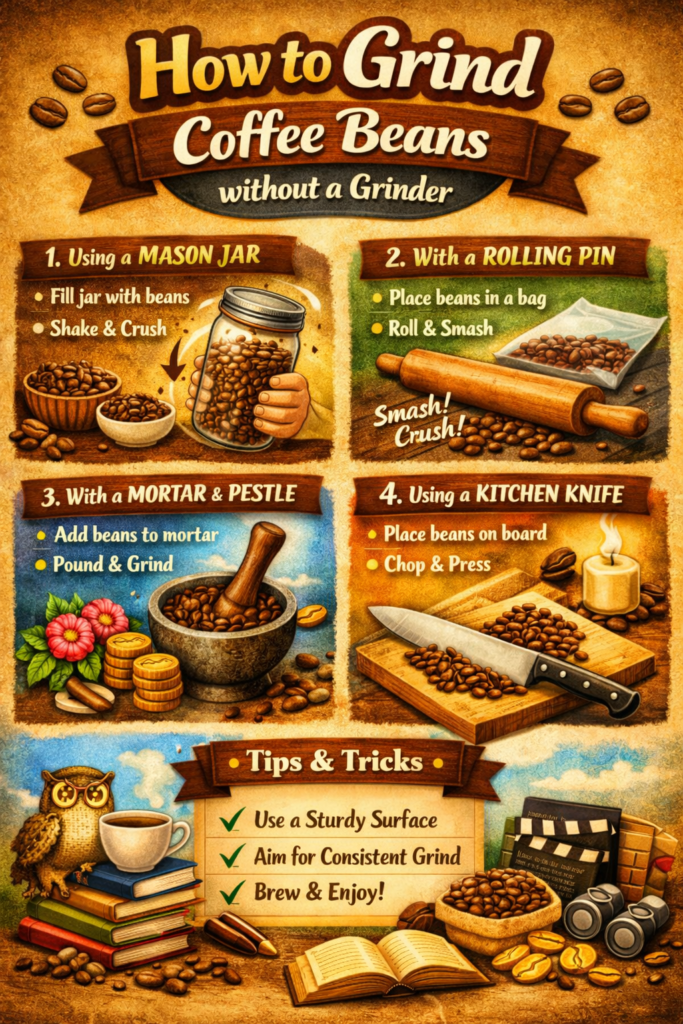
2. Mortar and Pestle (Best for Consistency)
This ancient tool is actually superior to a blender for manual control. It allows you to crush the beans into a precise texture, perfect for French Press or Cold Brew.
- The Technique: Process a small handful of beans at a time. Use a circular crushing motion rather than just vertical smashing.
- Best For: Medium-coarse to coarse grinds.
3. The Rolling Pin Method
If you need a medium-fine grind for drip coffee, the rolling pin is your best friend.
- The Technique: Place your beans in a heavy-duty plastic bag (or between two sheets of parchment paper). Use the rolling pin like a steamroller, applying firm pressure as you move across the bag.
- Precaution: Squeeze the air out of the bag before you start to prevent it from popping!
4. Hammer or Mallet
When you’re in a rush, a hammer gets the job done quickly, though it is the loudest and least precise method.
- The Technique: Wrap beans in a lint-free towel or plastic bag. Tap gently but firmly.
- Warning: Do not strike with full force; you want to crush the beans, not pulverize them into dust.
5. The Chef’s Knife
If you have steady hands and a large blade, you can “mince” your beans.
- The Technique: Use the flat side of a wide chef’s knife to crush the beans first (like smashing garlic). Once cracked, use a rocking motion with the blade to chop them into smaller bits.
6. Meat Tenderizer or Mallet
Similar to the hammer, but the textured side of a meat tenderizer can help grip the beans to prevent them from sliding around.
7. Pepper Mill or Spice Grinder
If you have a manual pepper mill that hasn’t been used for black pepper recently, it’s essentially a small burr grinder!
- Note: Ensure it is thoroughly cleaned, or your morning coffee will have a spicy, savory kick you didn’t ask for.
Comparison Table: Which Method Should You Use?
| Method | Best Grind Size | Effort Level | Consistency |
| Blender | Medium/Coarse | Low | Low |
| Mortar & Pestle | Coarse | High | High |
| Rolling Pin | Medium | Medium | Medium |
| Hammer | Extra Coarse | Medium | Low |
| Knife | Medium/Coarse | High | Low |
Tips for the Perfect “Manual” Grind
To keep your DIY coffee tasting like a professional brew, follow these three rules:
- Grind in Small Batches: Without a motor, manual grinding takes effort. Processing 20g at a time ensures you don’t get tired and start rushing, which leads to uneven chunks.
- Watch the Heat: Friction creates heat. If using a blender, keep pulses under 2 seconds to preserve the delicate aromatic oils.
- Store Correctly: DIY grinds are often uneven, meaning they oxidize faster. Only grind what you intend to brew immediately. Store any leftovers in an airtight, opaque container in a cool, dark place.
Pros and Cons of Grinding Without a Grinder
The Upside
- Accessibility: You can make coffee anywhere—camping, at a friend’s house, or during a power outage.
- Texture: Some manual methods, like the mortar and pestle, create a unique mouthfeel that electric grinders can’t replicate.
The Downside
- Inconsistency: Uneven grinds lead to “muddy” flavors (over-extraction and under-extraction happening at the same time).
- Time: It takes significantly longer to prep your morning cup.
Frequently Asked Questions
Can I grind coffee beans in a Nutribullet?
Yes! A Nutribullet or similar high-speed extractor works just like a blender. Use short pulses to avoid overheating the beans.
Will a food processor work for espresso?
Rarely. Espresso requires a very fine, powdery, and uniform grind. Most DIY methods struggle to get fine enough without leaving large chunks that will clog your machine.
Is it better to use whole beans even if I don’t have a grinder?
Absolutely. Whole beans stay fresh for weeks, whereas pre-ground coffee loses its peak flavor within 20 minutes of being exposed to air. Using a rolling pin on fresh beans is usually better than using old, stale pre-ground coffee.