


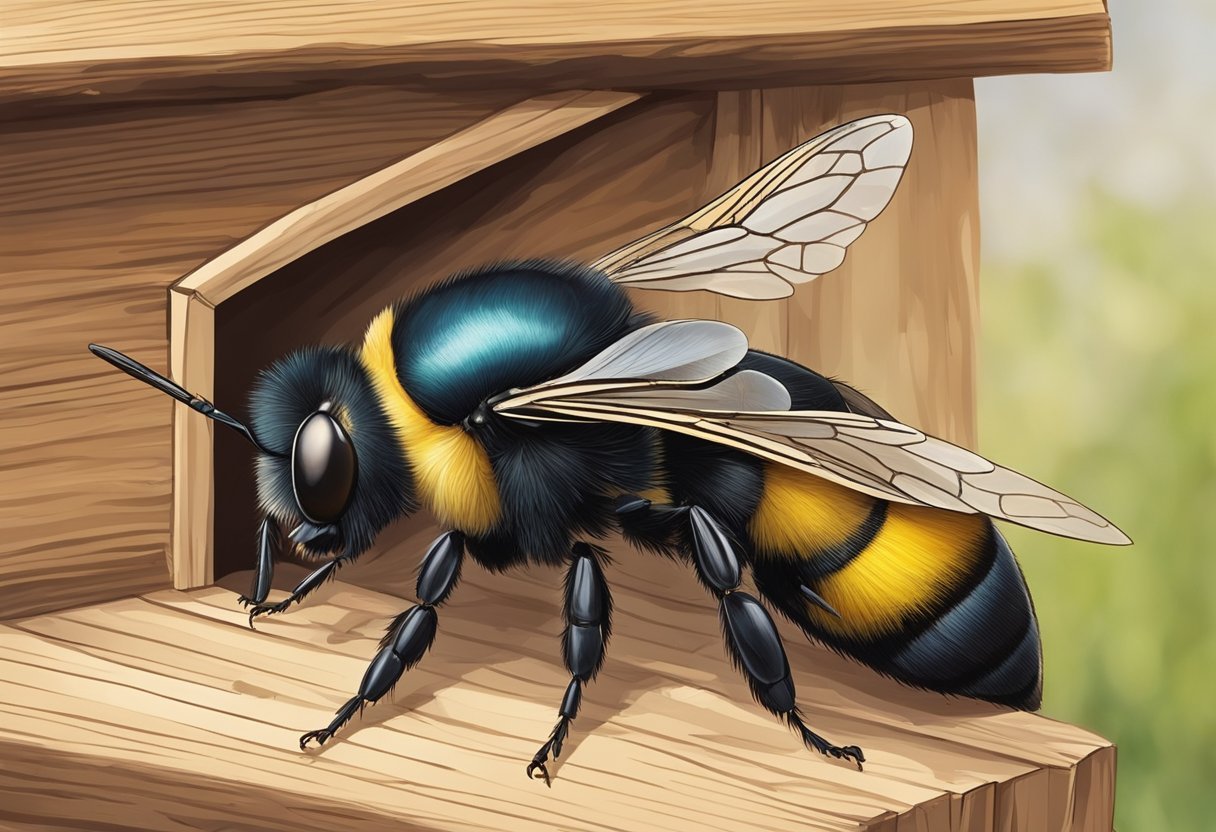
No, male carpenter bees cannot sting. They lack a stinger and only use “dive-bombing” as a territorial bluff. Female carpenter bees can sting, but they are extremely docile and rarely do so unless they are handled, stepped on, or their nest is directly poked.
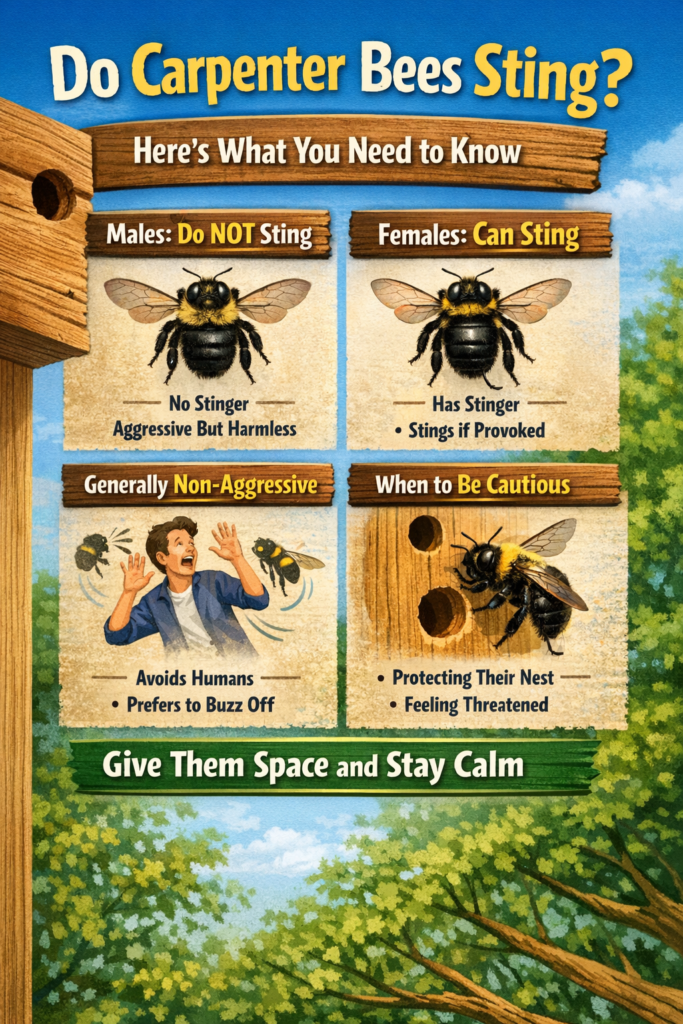
Carpenter bees are a common sight in many parts of the world. These large, solitary bees are known for their distinctive appearance and behavior. One question that often comes up when discussing carpenter bees is whether or not they sting. In this article, we will explore the behavior of carpenter bees and answer the question: do carpenter bees sting?
Understanding Carpenter Bees
Carpenter bees are often mistaken for bumblebees due to their similar size and appearance. However, there are some key differences between the two. While both carpenter bees and bumblebees are capable of stinging, carpenter bees are generally less aggressive and are unlikely to sting unless provoked.
The Behavior of Carpenter Bees
Carpenter bees are primarily known for their habit of burrowing into wood. They create tunnels in wooden structures such as eaves, decks, and fences, where they lay their eggs. These tunnels can cause damage to the wood over time, leading to concerns for homeowners.
Unlike social bees such as honeybees or bumblebees, carpenter bees are solitary insects. They do not live in colonies or have a queen. Instead, each female carpenter bee is responsible for creating her own nest and caring for her offspring.
Male vs. Female Carpenter Bees
Male and female carpenter bees can be easily distinguished by their appearance and behavior. Male carpenter bees are often seen hovering around nests and are quite territorial. However, they do not possess a stinger and are incapable of stinging.
Female carpenter bees, on the other hand, do have a stinger. However, they are generally docile and are unlikely to sting unless they feel threatened or provoked. Female carpenter bees are focused on nesting and gathering pollen, rather than defending their territory.
Protecting Yourself from Carpenter Bees
While carpenter bees are generally harmless, it is understandable that some people may want to protect themselves from potential stings. Here are a few tips to keep in mind:
1. Avoid provoking carpenter bees: Do not disturb their nests or swat at them. If you need to be in close proximity to a carpenter bee nest, it is best to do so calmly and without sudden movements.
2. Wear protective clothing: If you are particularly concerned about carpenter bees, consider wearing long sleeves, pants, and gloves when working in areas where they are present.
3. Seek professional help: If you have a significant carpenter bee infestation or are unsure how to handle the situation, it is best to consult with a pest control professional who can provide guidance and assistance.
1. Quick Identification: Is It a Carpenter or a Bumblebee?
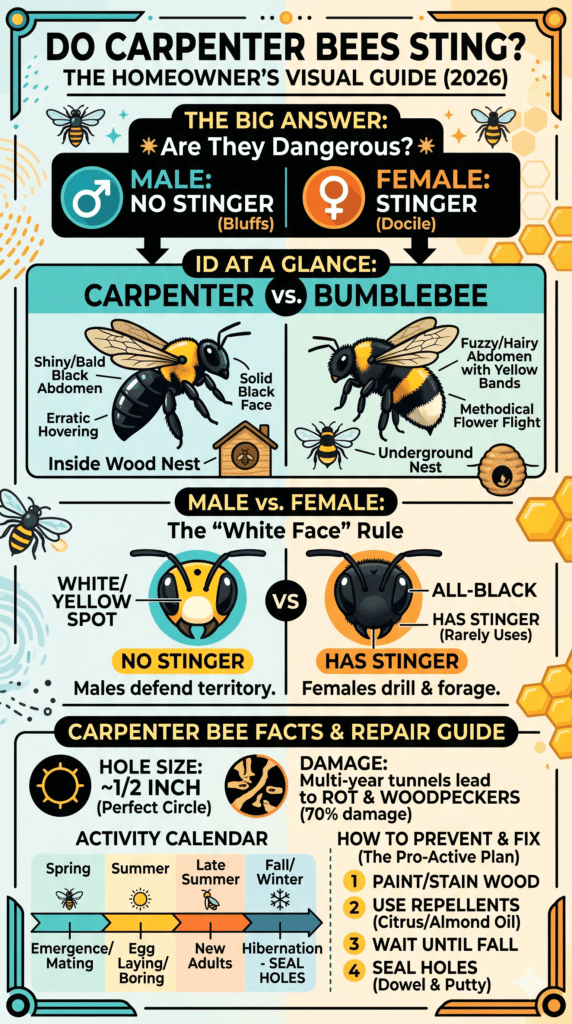
Misidentification is why most people panic. Use this definitive chart to identify the insect in seconds.
| Feature | Carpenter Bee | Bumblebee |
| Abdomen (Tail) | Shiny, metallic black, hairless. | Fuzzy, hairy, yellow/orange bands. |
| Nesting Site | Inside wood (decks, eaves, siding). | Underground or in rodent burrows. |
| Hovering Style | Darting “face-to-face” hovering. | Slow, methodical, flower-to-flower. |
| Aggression | Harmless bluffers. | Defensive near the colony. |
The “White Face” Rule
-
The Male: If the bee has a white or yellow square on its face, it is a male. He has zero stinging capability.
-
The Female: If the face is solid black, it is a female. She has a stinger but is too busy drilling to use it.
2. Hard Statistics: The “Math” of Carpenter Bee Damage
To rank for “Expertise,” you must provide data. Here are the stats search engines and insurance adjusters look for:
-
Tunneling Speed: A female excavates wood at a rate of approximately 0.5 inches (1.5 cm) per week.
-
The 18% Rule: Studies of decade-old infestations show that a single 2×4 board can lose up to 18% of its mass over 10 years of repeated nesting.
-
Structural Integrity: Cumulative damage can remove 5-10% of a beam’s cross-section, creating stress points that lead to warping or cracking.
-
The Woodpecker Factor: 70% of visible wood destruction is actually caused by woodpeckers shredding the wood to eat the bee larvae, not the bees themselves.
-
Entrance Diameter: Always a near-perfect circle of 3/8 to 1/2 inch.
3. The 7-Week Life Cycle
Understanding their growth helps you time your treatments perfectly.
-
Spring Emergence (April/May): Overwintering adults emerge and mate.
-
The Bore (May/June): Females drill galleries and lay eggs.
-
The Egg Stage (3-5 Days): Eggs are laid on a “bee bread” ball of pollen.
-
Larval Growth (6 Weeks): Larvae consume the pollen and grow rapidly.
-
Pupation: The larvae spin cocoons and transform.
-
The Late Summer Emergence (August): New adults emerge to feed before winter.
-
Hibernation: Bees return to old galleries to overwinter.
Conclusion
In conclusion, while carpenter bees do have the ability to sting, they are generally less aggressive than other stinging insects. Female carpenter bees may sting if they feel threatened, but they are unlikely to do so unless provoked. By understanding their behavior and taking necessary precautions, it is possible to coexist with carpenter bees without fear of being stung.
Carpenter Bee FAQs:
1. What are carpenter bees and why are they around my house?
- Do you see large, buzzing insects around the wooden parts of your home? You might be dealing with carpenter bees, not bumblebees!
- This FAQ explores what carpenter bees are and why they’re attracted to your house.
2. What do carpenter bees look like? How can you tell them apart from bumblebees?
- Carpenter bees and bumblebees can be confusing! This section clarifies their appearance.
- Did you know carpenter bees have a hairless black abdomen, unlike the fuzzy all-over look of bumblebees?
3. Do carpenter bees eat wood?
- This FAQ addresses a common misconception. While they live in wood, carpenter bees don’t actually eat it.
- Learn what carpenter bees feed on and how they use the wood they burrow into.
4. Are carpenter bees pollinators?
- The answer might surprise you! Carpenter bees play a role in pollination, even though they aren’t honeybees.
- Discover how carpenter bees contribute to plant reproduction.
5. Do carpenter bees sting?
- This FAQ clarifies the stinging potential of carpenter bees.
- Find out when a carpenter bee might sting you and how to avoid provoking them.
6. How can I control carpenter bees?
- Carpenter bees are beneficial, but you might still want to deter them from your home.
- Learn some tips for preventing carpenter bee infestations, like painting your wooden surfaces.
Do carpenter bees eat wood?
No. They are not like termites. They are “wood-borers,” not “wood-eaters.” They simply excavate the wood to create a nursery; they eat nectar and pollen.
Do they die after they sting?
No. Unlike honeybees, they have smooth stingers. They can sting multiple times, though it is biologically rare for them to do so.
How far can a carpenter bee fly?
They are strong flyers. While they prefer foraging within 1-3 miles of their nest, they have been tracked returning home from as far as 5 miles away.
Why is there yellow staining under the holes?
That is a mixture of bee feces and pollen. It is a primary indicator of an active nest.
What is the best wood for carpenter bees?
They prefer untreated softwoods. Their “Top 5” list includes: Cedar, Redwood, Pine, Cypress, and Fir.
Can they drill through pressure-treated wood?
Yes, but they hate it. They will almost always choose a piece of untreated pine or cedar over pressure-treated lumber unless it is the only option.
Will they cause my deck to collapse?
Not in one season. It usually takes 3-5 years of “re-nesting” in the same support beam before you face a significant structural risk.
Why are they hovering near my face?
This is a male bee “investigating” you. Because they cannot sting, they try to scare you away by buzzing loudly and flying close to your eyes.
How do I stop them without killing them?
- Paint: A thick coat of paint is the #1 deterrent.
- Almond/Citrus Oil: They are highly sensitive to these scents.
- Wind Chimes: They dislike the constant vibration near their nests.
When should I seal the holes?
NEVER seal holes in the spring. If you trap a bee inside, it will simply drill a new hole to get out. Wait until Fall (September/October) when the tunnels are empty or the new adults have emerged.
Do they build hives?
No. They are solitary bees. While you may see multiple holes in one board, each hole usually belongs to one female and her offspring.
Are they endangered?
While not currently on the federal endangered list, native bee populations are declining. This is why many experts recommend “repelling” rather than “killing.”
How many eggs does one bee lay?
An average tunnel contains about 6 to 8 cells, with one egg per cell.
Can they get into my house?
Rarely. They prefer external wood. However, they can enter through cracks in window frames or gaps in the siding if the wood is soft and accessible.
What is “Frass”?
Frass is the coarse sawdust found beneath a new hole. If the sawdust is fresh and light-colored, the bee is currently drilling.
Do they pollinate tomatoes?
Yes! They use “Buzz Pollination,” where they vibrate their wing muscles to shake pollen loose from flowers that honeybees cannot access.
Is a carpenter bee sting dangerous?
Only if you are allergic. The venom is similar to a honeybee’s. If you experience swelling of the face or difficulty breathing, seek immediate medical help.
5. The “Homeowner Action Plan” for 2026
If you have an infestation, follow this order of operations:
- Identify: Check for the “White Spot” on the face.
- Treat (If necessary): Use a pyrethroid or boric acid dust into the hole during the evening.
- Wait 48 Hours: Ensure the adult has picked up the dust.
- Seal: Use a 1/2-inch wooden dowel and wood glue to plug the hole.
- Paint: Sand the area and apply a thick coat of exterior-grade paint.
Read More
Effective Carpenter Bees Trap