


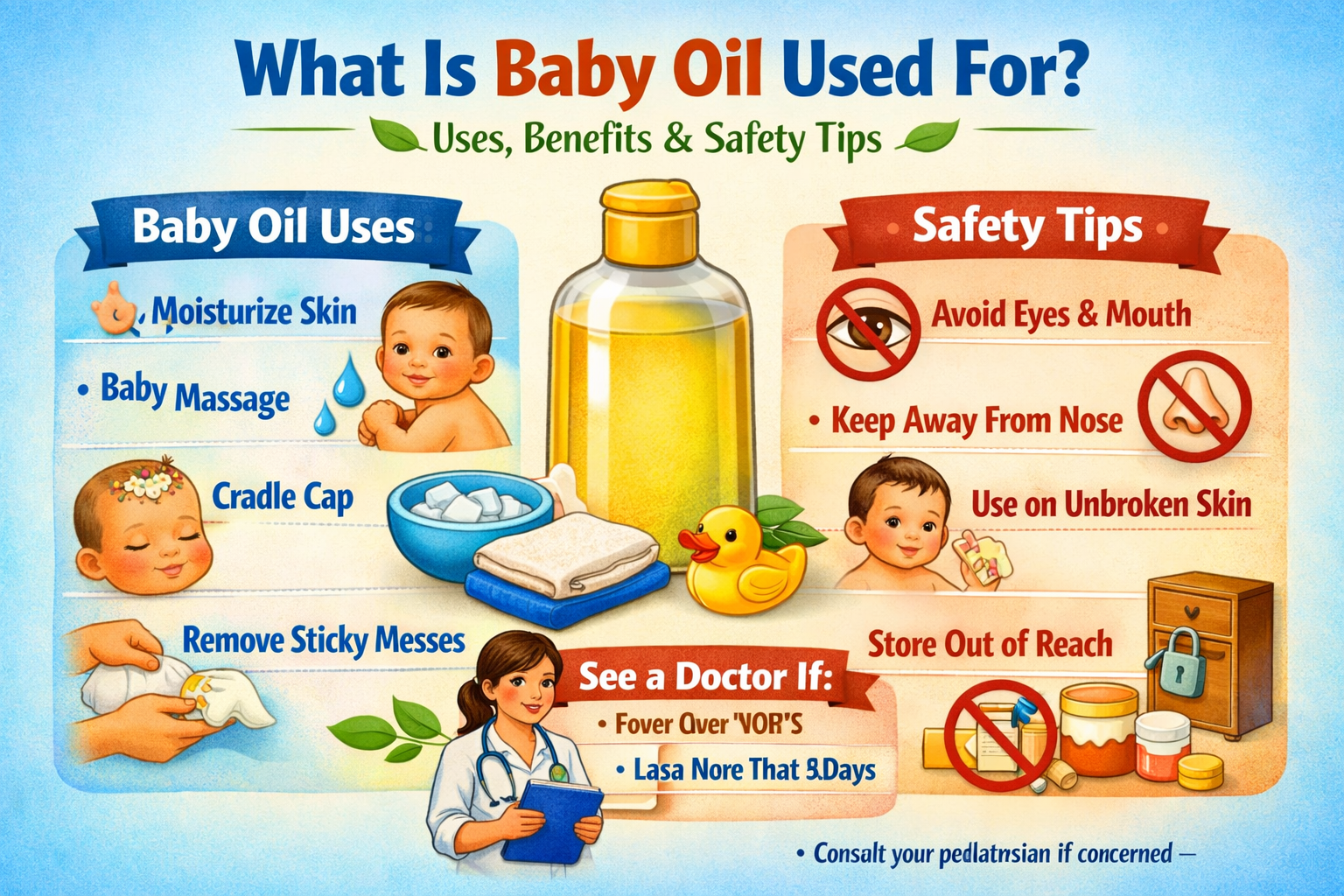
Baby oil is primarily used to lock in moisture, soothe dry infant skin, and gently treat cradle cap. Beyond newborn care, adults widely use baby oil as an effective makeup remover, shaving lubricant, and post-shower skin moisturizer. Additionally, its slick consistency makes it a versatile household staple for removing sticky residues, untangling delicate jewelry, and polishing leather goods safely and effectively.
A distinct, powdery scent and a slick, clear consistency instantly bring baby oil to mind for most adults. For generations, this simple liquid has been a staple on changing tables across the globe. However, relegating this powerhouse product exclusively to the nursery is a massive underutilization of its capabilities.
From advanced dermatological applications to surprising household maintenance hacks, baby oil is a multi-purpose workhorse. Understanding the science behind how it interacts with the skin and various materials unlocks dozens of practical, money-saving applications.
The Science of Baby Oil: What Is It Exactly?
To understand how to use a product effectively, you must first understand its chemical makeup. Traditional baby oil is extraordinarily simple. It is typically composed of 98% highly refined mineral oil and 2% added fragrance.
Mineral oil is derived from petroleum. Before you let the word “petroleum” cause alarm, it is crucial to note that cosmetic-grade mineral oil is purified to an extreme degree, removing all toxins, impurities, and potential carcinogens. It is recognized by dermatologists as one of the most biologically inert substances available, meaning it is highly unlikely to cause an allergic reaction.
In dermatological terms, mineral oil is an occlusive. Unlike humectants (such as hyaluronic acid or glycerin) that draw water into the skin from the environment, occlusives sit on top of the stratum corneum (the outermost layer of the skin). They form an invisible, impermeable physical barrier that physically traps existing moisture underneath, completely halting a process known as transepidermal water loss (TEWL).
Today, many parents and consumers also opt for plant-based baby oils. These are formulated using natural carrier oils like sweet almond oil, jojoba oil, or sunflower seed oil. While plant-based oils offer additional vitamins and fatty acids, traditional mineral oil remains the gold standard for pure moisture retention and hypoallergenic safety.
Primary Uses for Infant Care
The original and most widely recognized purpose of baby oil is, naturally, caring for infants. A newborn’s skin is roughly 30% thinner than an adult’s, making it incredibly susceptible to drying out, chafing, and irritation.
Infant Massage and Bonding
Touch is a newborn’s first language. Infant massage is a scientifically backed practice that promotes healthy weight gain, aids in digestion, and significantly reduces colic and crying. Because baby skin is delicate, massaging without a lubricant creates painful friction.
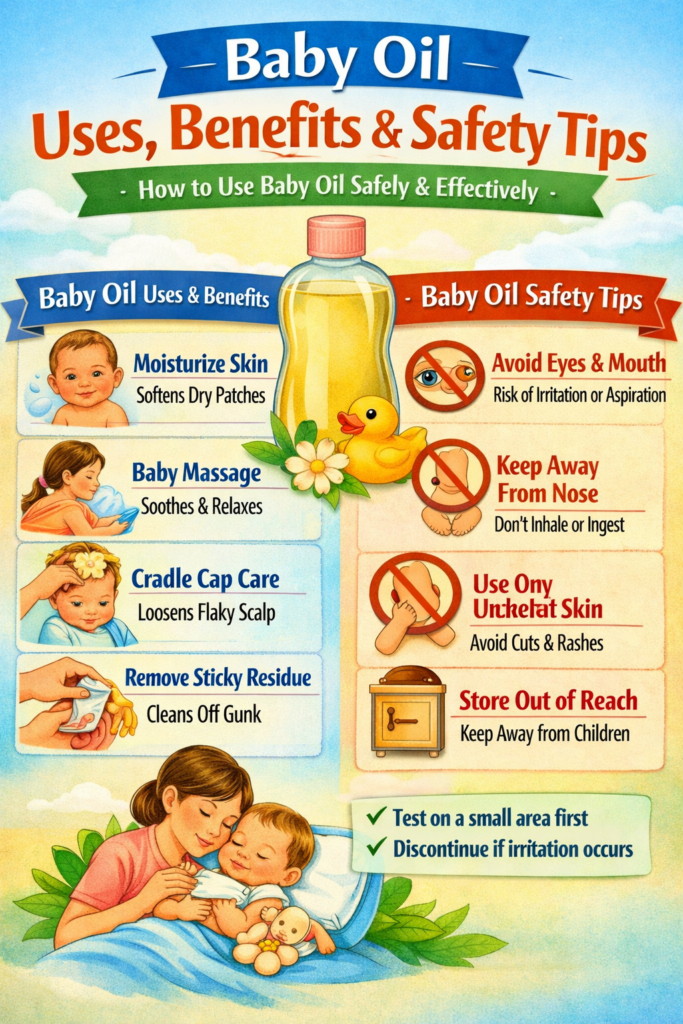
Baby oil provides the perfect “slip” for a gentle, rhythmic massage. Warming a few drops of oil between your palms before applying it to your baby’s legs, torso, and back stimulates their vagus nerve, which helps regulate their nervous system and promotes deep, restorative sleep. When stocking up on gentle infant skincare and bath essentials, a high-quality, hypoallergenic bottle of baby oil is a non-negotiable addition to your daily routine.
Treating Cradle Cap (Seborrheic Dermatitis)
Cradle cap presents as thick, yellow, crusty scales on a baby’s scalp. It is harmless but unsightly, caused by overactive sebaceous (oil) glands. Picking at the scales dry will pull out the baby’s hair and damage the scalp.
Baby oil acts as a powerful solvent for these crusts. By generously massaging the oil into the scalp and letting it sit for 15 to 20 minutes, the thick scales soften and lift away from the skin. You can then use a soft-bristled baby brush or a fine-toothed comb to gently sweep the flakes out of the hair before washing it away with a mild baby shampoo.
Preventing Diaper Rash and Chafing
Because mineral oil repels water, applying a very thin layer of baby oil to a clean, dry diaper area creates a temporary barrier against urine and acidic stool. While thick zinc oxide creams are better for treating an active diaper rash, a drop of baby oil is excellent for preventing one. Furthermore, if your baby has deep, chubby thigh rolls that are prone to chafing and redness from friction, dabbing a tiny amount of oil in the skin folds allows the skin to glide smoothly rather than rub aggressively.
Adult Skincare and Beauty Hacks
The beauty industry is flooded with highly specific, expensive products. Yet, many professional makeup artists and dermatologists keep a basic bottle of baby oil in their kits due to its unparalleled effectiveness and low cost.
The Ultimate Post-Shower Moisturizer
Because baby oil is an occlusive, applying it to dry skin is essentially useless—there is no moisture there to lock in. The secret to adult application is using it immediately after a shower while your skin is still heavily damp.
Before reaching for your towel, smooth a few drops of baby oil over your entire body. The oil will trap the water droplets against your skin, forcing hydration into your epidermis. You can then gently pat yourself dry with a towel. This method leaves your legs and arms remarkably glowing, hydrated, and soft for up to 24 hours without the sticky residue left by heavy body butters.
Effortless Makeup Removal
Waterproof mascara, long-wear liquid lipstick, and heavy foundation are formulated to resist water. Because “like dissolves like,” oil is required to break down oil-based cosmetics.
Baby oil easily melts away the most stubborn makeup without requiring harsh scrubbing that damages the delicate skin around your eyes. Apply a small amount to a cotton pad, press it gently against your closed eyelid for ten seconds to let the oil break down the mascara, and wipe it away. Note: Always follow up with a gentle water-based facial cleanser to remove the leftover oil and prevent clogged pores.
A Superior Shaving Lubricant
Shaving foams and gels often contain harsh alcohols and synthetic perfumes that dry out the skin and trigger razor burn. Substituting shaving cream with a thin layer of baby oil provides an incredibly close shave. The oil softens the hair follicle and creates a slick barrier that allows the razor blades to glide effortlessly, drastically reducing the risk of nicks, cuts, and the dreaded “strawberry legs” (dark, irritated pores).
Cuticle and Nail Care
Frequent hand washing and cold weather destroy the cuticles, leading to painful hangnails. Massaging a single drop of baby oil into your nail beds every night before sleep deeply conditions the dead skin around the nail, promoting stronger, healthier nail growth and extending the life of your manicures.
Ingenious Household and First-Aid Uses
Moving out of the bathroom and into the house, baby oil proves itself to be a powerful household solvent and lubricant. Navigating parenthood and homeownership is vastly easier when you learn to repurpose what you already own. Exploring the resources at the Wobblebee parenting hub often reveals that the most traditional products have the most versatile, modern applications.
Painless Bandage Removal
Ripping a highly adhesive bandage off your skin—or worse, a screaming toddler’s arm—is an agonizing experience. The adhesive used in medical tape is highly stubborn. Saturating the outside of the bandage with baby oil and letting it sit for five minutes degrades the chemical bonds of the adhesive. The bandage will then slide off the skin with zero pulling, pain, or leftover sticky residue.
Dissolving Stickers and Labels
Whether you are trying to remove a price tag from a glass jar or your child has placed a dozen cartoon stickers on your hardwood floor, baby oil is your solution. Apply the oil directly to the paper residue, allow it to sit for ten minutes to fully saturate the glue, and gently scrape it away with a plastic credit card or your fingernail.
Untangling Delicate Jewelry
A knotted gold chain can feel impossible to untangle, and pulling on it usually causes the delicate links to snap. Place the knotted section of the necklace on a non-porous plate, apply a drop of baby oil directly to the knot, and use two sewing needles to gently tease the links apart. The oil provides the necessary lubrication for the metal to slip free.
Polishing and Protecting Surfaces
Mineral oil is a fantastic, non-toxic polish for various household items.
- Stainless Steel: A few drops of baby oil buffed into stainless steel appliances with a microfiber cloth instantly removes fingerprints and watermarks, leaving a brilliant, protective shine.
- Leather Goods: If your leather shoes or bags are looking dull, a very light application of baby oil can condition the leather and restore its luster (always test on an inconspicuous spot first to ensure it does not alter the dye).
- Wooden Cutting Boards: Unscented mineral oil is technically food-safe and can be used to oil wooden cutting boards and butcher blocks, preventing the wood from drying out, splintering, and harboring bacteria.
Comparing Common Oils for Skin Care
With so many oils on the market, it is helpful to know exactly when to reach for baby oil versus a plant-based alternative.
| Oil Type | Base Ingredient | Best Used For | Absorption Rate | Comedogenic Rating (Pore-Clogging Potential) |
| Baby Oil | Highly Refined Mineral Oil | Locking in moisture, makeup removal, barrier protection | Very Slow (Sits on top of skin) | 0 (Non-comedogenic, but traps sweat) |
| Coconut Oil | Extracted Coconut Meat | Deep conditioning hair, thick body moisturization | Medium | 4 (Highly likely to clog pores) |
| Olive Oil | Pressed Olives | Severe dry skin patches, scalp treatments | Slow | 2 (Moderately likely to clog pores) |
| Jojoba Oil | Jojoba Plant Seeds | Facial moisturizing, acne-prone skin, mimicking natural sebum | Fast (Penetrates deeply) | 2 (Low pore-clogging potential) |
| Standard Baby Lotion | Water + Emollients | Everyday hydration, hot weather use | Fast | Varies by formulation |
Critical Safety Precautions and Warnings
While baby oil is generally incredibly safe, its physical properties require strict adherence to a few critical safety rules, particularly regarding infants and sun exposure.
The Danger of Inhalation (Lipid Pneumonia)
The most severe risk associated with baby oil has nothing to do with applying it to the skin. Baby oil must be kept entirely out of reach of children. If a child drinks baby oil and accidentally aspirates it (breathes it into their lungs while coughing or choking), it coats the inside of the lungs. Because the body cannot absorb or break down mineral oil, this causes a severe, life-threatening condition called lipid pneumonia. Always ensure the child-proof cap is securely fastened and store the bottle on a high shelf.
Sun Exposure and Tanning Risks
In previous decades, using baby oil as a tanning accelerator was a popular, albeit highly dangerous, trend. Baby oil contains zero SPF protection. Applying it to your skin and sitting in the sun acts exactly like a magnifying glass on dry leaves. The oil intensifies the ultraviolet (UV) rays, leading to severe, blistering sunburns and massively increasing your risk of melanoma and premature skin aging. Never use baby oil prior to outdoor sun exposure.
Facial Use and Breakouts
While mineral oil itself has a comedogenic rating of 0 (meaning the molecules are too large to physically enter and clog a pore), its occlusive nature causes issues for acne-prone individuals. Because it forms an impermeable barrier, it traps sweat, dead skin cells, and existing sebum underneath it. For adults with active breakouts or highly oily faces, applying baby oil will almost certainly result in a severe flare-up.
Similarly, if your baby has an angry, red rash that is hot to the touch, do not coat it in baby oil. Trapping the heat will exacerbate the inflammation. In these instances, opting for fragrance-free baby eczema treatments and barrier creams to calm the flare-up is far superior to standard oil.
Allergies to Added Fragrances
Pure mineral oil rarely causes allergic reactions. However, the signature “baby powder” scent added to traditional baby oils is formulated from various synthetic fragrances. If you or your baby experience contact dermatitis (red, itchy skin) after using baby oil, it is almost certainly a reaction to the fragrance. Always patch-test a new product on the inside of the wrist and wait 24 hours to observe for any redness. If sensitivity occurs, switch to a 100% pure, fragrance-free mineral oil or a plant-based alternative.
Frequently Asked Questions
Can you use baby oil on your face?
While baby oil effectively removes facial makeup, you should not leave it on your face as a daily moisturizer if you are prone to acne. Its occlusive barrier traps sweat and dead skin cells against the epidermis, which creates a perfect breeding ground for bacteria and can lead to severe breakouts. Always wash the oil off your face with a water-based cleanser.
Does baby oil help hair grow?
No, baby oil does not stimulate hair follicles or promote hair growth. However, applying a tiny amount to the ends of dry hair can temporarily seal split ends and add shine, making the hair appear healthier and preventing further breakage from environmental damage.
Is baby oil safe for newborns?
Yes, baby oil is completely safe for topical use on newborns. It is highly refined and hypoallergenic. However, you should use it sparingly so the baby does not become too slippery to hold safely, and strictly ensure the bottle is kept away from their face to completely eliminate any risk of inhalation.
Can baby oil be used as a personal lubricant?
No, baby oil should never be used as a personal lubricant if you are using latex condoms. Oil-based products rapidly degrade latex, causing condoms to break or tear within minutes, rendering them entirely ineffective for pregnancy and STI protection. It can also disrupt natural vaginal pH, leading to bacterial infections.
Does baby oil darken the skin?
Baby oil itself does not contain any ingredients that alter melanin production or darken the skin indoors. However, if you apply baby oil and go out into the sun, the oil dramatically magnifies the UV rays, which will cause your skin to tan (and eventually burn) much faster than it normally would, leading to severe sun damage.