

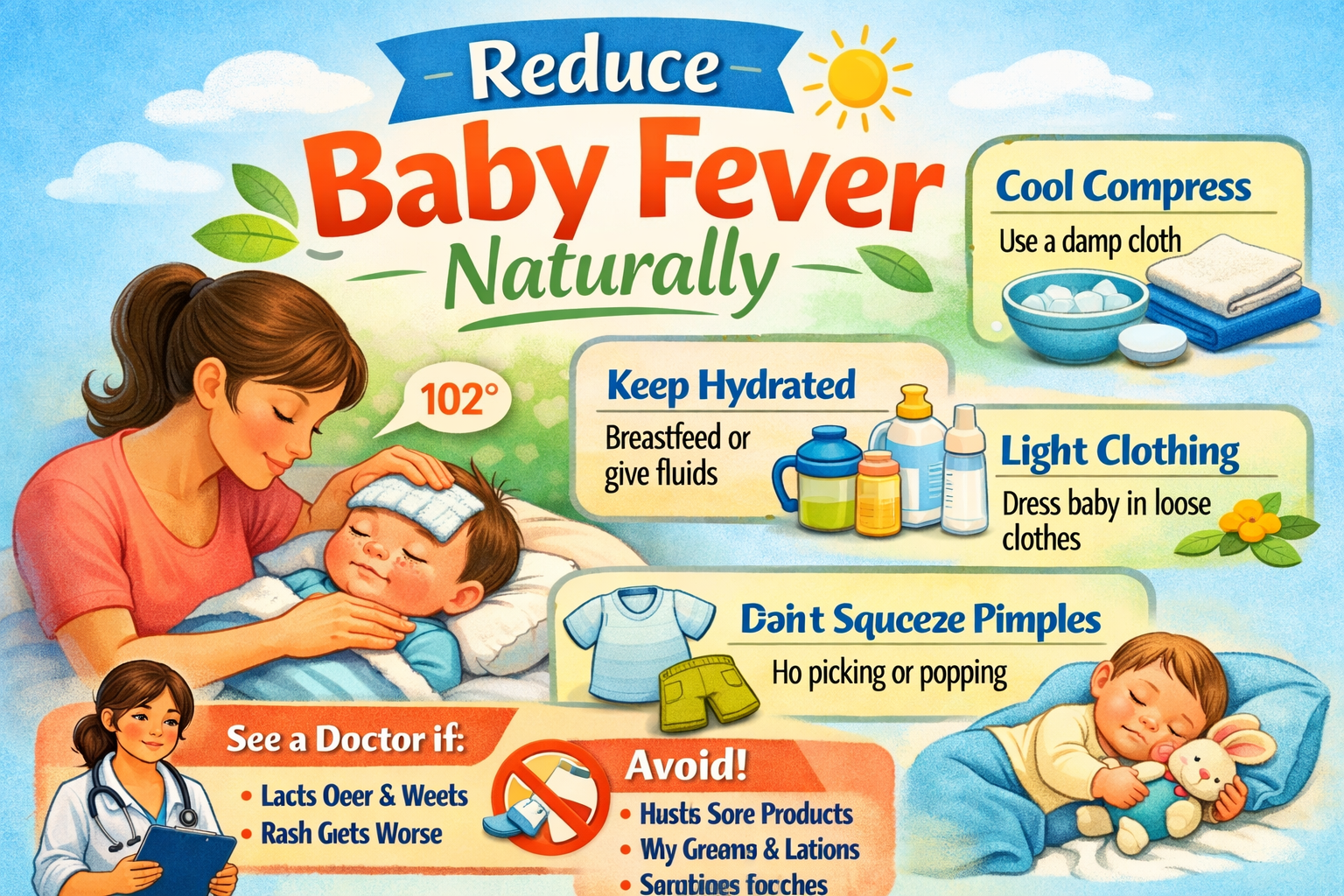
To reduce a fever in a baby naturally, keep them consistently hydrated with breast milk or formula. Dress the infant in a single layer of lightweight, breathable clothing and maintain a cool, comfortable room temperature around 70°F (21°C). You can also administer a lukewarm sponge bath to safely lower their body temperature. Strictly avoid cold baths or ice packs, which can cause shivering and inadvertently increase their fever.
Few things trigger parental anxiety quite like a baby radiating heat in the middle of the night. When you press your lips against their forehead and feel that unmistakable warmth, your immediate instinct is to fix it. While modern medicine offers over-the-counter pediatric reducers, many parents prefer to start with gentle, non-pharmacological interventions for mild, uncomplicated fevers.
A fever itself is not an illness; it is a vital, biological mechanism. It is your baby’s immune system working exactly as it should to burn off an invading viral or bacterial infection. Understanding how to manage this elevated temperature safely allows you to keep your infant comfortable while their body does the heavy lifting of healing.
The Golden Rule: When a Fever is a Medical Emergency
Before exploring any home remedies, you must rule out a medical emergency. The safety protocols for infant fevers are strictly dictated by the baby’s age and the exact number on the thermometer.
A true fever in an infant is defined as a core body temperature of 100.4°F (38°C) or higher, as measured rectally. Rectal thermometers provide the only medically accurate reading for babies under one year of age; forehead and ear thermometers are highly prone to user error and environmental interference.
The 3-Month Rule: If your baby is under 12 weeks (3 months) old and registers a temperature of 100.4°F or higher, stop reading and go to the nearest pediatric emergency room. Do not attempt to treat the fever at home. Newborns do not have a fully developed blood-brain barrier, meaning a seemingly minor infection can rapidly escalate into sepsis or meningitis.
For babies older than three months with mild fevers, observing their behavior is often more important than the number on the thermometer. If they are still playing, making wet diapers, and resting comfortably, natural fever management is an excellent first-line approach.
5 Safe and Natural Ways to Reduce a Baby’s Fever
When your older infant is battling a mild bug, your primary goal is comfort, not necessarily forcing the thermometer back down to 98.6°F. By making strategic adjustments to their environment and routine, you can safely draw excess heat away from their body.
1. Maximize Hydration (The Ultimate Defense)
Fever dramatically increases the metabolic rate. As the body heats up, it rapidly loses moisture through sweating and faster breathing. Dehydration is the most significant risk associated with infant fevers.
For babies under six months, breast milk or formula should be offered frequently. Do not offer water, as this can dilute the sodium levels in their tiny bodies. If you are nursing, put the baby to the breast as often as they will accept it. Breast milk not only provides essential hydration but also delivers real-time, customized antibodies tailored to fight the specific pathogen your baby is currently battling.
For babies over six months who have started solids, you can introduce small sips of water or pediatric electrolyte solutions to replace lost sodium and potassium. However, their primary milk source should remain the priority. Monitoring wet diapers is critical; if your baby has fewer than three wet diapers in a 24-hour period, you must contact a pediatrician immediately.
2. Optimize Clothing and Blankets
A persistent and dangerous myth in fever management is the idea that you should “sweat it out” by bundling the child in heavy blankets. Doing this to an infant traps the heat against their skin, driving their internal temperature to dangerous levels.
Dress your baby in a single layer of loose-fitting, breathable cotton. Outfitting your child in breathable infant clothing essentials ensures adequate airflow, allowing heat to dissipate naturally from their skin. If they appear to be shivering—a sign that their internal temperature is currently rising—you can add a light muslin swaddle or blanket until the chills pass, but remove it as soon as they feel warm and stable.
3. Administer a Tepid Sponge Bath
Water is an incredibly effective conductor of heat. A tepid (lukewarm) sponge bath can safely lower a child’s temperature by a degree or two through the process of evaporation.
Fill a basin with water that is around 85°F to 90°F (29°C to 32°C). It should feel slightly warm to the touch, similar to a standard swimming pool. Using a soft washcloth from your gentle baby bath supplies, gently wipe down their arms, legs, and torso. The water evaporating off their skin will naturally pull the heat away. Limit this bath to 10 or 15 minutes to prevent them from getting too cold.
4. Control the Ambient Room Temperature
The environment your baby is resting in plays a massive role in their temperature regulation. Keep the nursery cool, aiming for a room temperature between 68°F and 72°F (20°C and 22°C).
You can use a fan to keep the air circulating in the room, but never point the fan directly at the baby. A direct draft can cause them to shiver, triggering the brain to generate more heat. Keeping the room dim, quiet, and cool creates the optimal environment for the immune system to do its work.
5. Prioritize Rest and Skin-to-Skin Contact
Sleep is the ultimate natural medicine. During deep sleep, the body redirects its energy toward producing white blood cells and fighting off the infection. Let your baby sleep as much as their body demands, ignoring standard nap schedules for a few days.
Additionally, skin-to-skin contact (kangaroo care) is a scientifically proven method for thermal regulation. A mother’s or father’s chest can act as a natural thermostat. If the baby is too hot, the parent’s body will naturally cool to help draw out the heat. Stripping the baby down to just a diaper and laying them against your bare chest under a light blanket provides immense comfort and physical regulation. Navigating these stressful sick days is tough, but relying on resources and leaning on the Wobblebee parenting community can provide the reassurance you need to get through the night.
Dangerous Home Remedies to Strictly Avoid
Desperation can lead parents to try well-meaning but highly dangerous methods passed down through generational folklore. Medical science has decisively debunked several traditional fever remedies that you must avoid at all costs.
Never Use Cold Water or Ice Baths:
Plunging a feverish baby into cold water or placing ice packs on their skin is actively harmful. The sudden extreme cold shocks the system, causing the superficial blood vessels near the skin to constrict. This traps the heat deep inside the body’s core. Furthermore, the cold will cause violent shivering, which is the body’s mechanism for generating heat, effectively driving the fever higher.
Never Use Rubbing Alcohol:
Wiping a child down with rubbing (isopropyl) alcohol is a highly dangerous, outdated practice. Alcohol evaporates very quickly, providing a cooling sensation, but it is absorbed directly through a baby’s thin skin and inhaled into their lungs. This can cause severe alcohol poisoning, respiratory distress, and coma.
Never Administer Aspirin to a Child:
Unless explicitly directed by a pediatric cardiologist, never give aspirin to a baby or young child. Aspirin usage during viral illnesses (such as the flu or chickenpox) is directly linked to Reye’s syndrome, a rare but life-threatening condition that causes massive swelling in the liver and brain.
Evaluating Fever Management Approaches
To help you make the best decision for your child’s comfort, use this guide to compare natural home remedies against standard over-the-counter medical interventions.
| Management Method | Best Used For | Pros | Cons / Risks |
| Natural Methods (Fluids, Tepid Bath, Rest) | Babies 6+ months, mild fevers (under 102°F), child is playing and drinking normally. | No risk of medication overdose, supports the body’s natural immune response. | Does not dramatically lower temperature quickly; requires constant monitoring. |
| Infant Acetaminophen (Tylenol) | Babies 3+ months (with doctor approval), moderate fevers causing visible discomfort or pain. | Fast-acting, reliable fever reduction, also treats accompanying pain (teething, body aches). | Must be dosed exactly by baby’s weight; risk of liver toxicity if over-administered. |
| Infant Ibuprofen (Motrin/Advil) | Babies 6+ months ONLY, persistent fevers or high inflammation. | Longer-lasting relief (up to 8 hours), excellent for high-grade fevers. | Can irritate an empty stomach; absolutely unsafe for babies under 6 months. |
Knowing When Natural Isn’t Enough: Red Flags
Even if you prefer natural remedies, a fever can sometimes escalate beyond what is safe to manage at home. Trust your parental intuition. Regardless of what the thermometer says, you should seek immediate pediatric care if your baby exhibits any of the following symptoms:
- Extreme Lethargy: The baby will not wake up for feedings, makes weak or whimpering cries, or shows no interest in their surroundings.
- Signs of Severe Dehydration: Sunken soft spot (fontanelle) on the top of the head, crying without producing any tears, or a dry, sticky mouth.
- Breathing Difficulties: Rapid breathing, flaring nostrils, or the skin sucking in around their ribs with every breath.
- Unexplained Rashes: A fever accompanied by a dark red or purple rash that does not fade or turn white when you press a glass against it (a potential sign of meningitis).
- Duration: A fever that lasts longer than 24 hours in a child under two years old, or longer than three days in an older toddler.
Frequently Asked Questions
Is 99.5 a fever for a baby?
No, a rectal temperature of 99.5°F is not considered a fever. A baby’s normal body temperature naturally fluctuates throughout the day. Medical professionals do not classify an infant’s temperature as a true fever until it reaches 100.4°F (38°C) rectally.
Can I put wet socks on my baby to lower a fever?
The “wet sock treatment” is an old naturopathic remedy that involves placing cold, wet socks on a baby’s feet to draw blood downward and increase circulation. However, pediatricians generally do not recommend this, as wet, cold clothing can make the baby shiver, which inadvertently raises their core body temperature.
How long do viral fevers last in babies?
Most uncomplicated viral fevers in infants and toddlers will resolve on their own within two to three days. If a fever persists beyond 72 hours, or if it disappears for a full 24 hours and then returns, you should schedule an evaluation with your pediatrician to rule out a secondary bacterial infection like an ear infection or UTI.
Should I wake a sleeping baby with a fever?
Generally, you should not wake a peacefully sleeping baby just to check their temperature or administer fever-reducing medication. Sleep is vital for their immune system to fight the illness. However, if the baby is under 3 months, or if they are breathing erratically, feeling unusually hot, or have missed multiple feeds, you should wake them to assess their condition.
Why is my baby’s fever higher at night?
Everyone’s core body temperature naturally rises in the late afternoon and evening due to our circadian rhythms. When a baby is sick, this natural evening spike compounds the fever, making them feel significantly warmer and fussier right around bedtime compared to how they felt in the morning.