


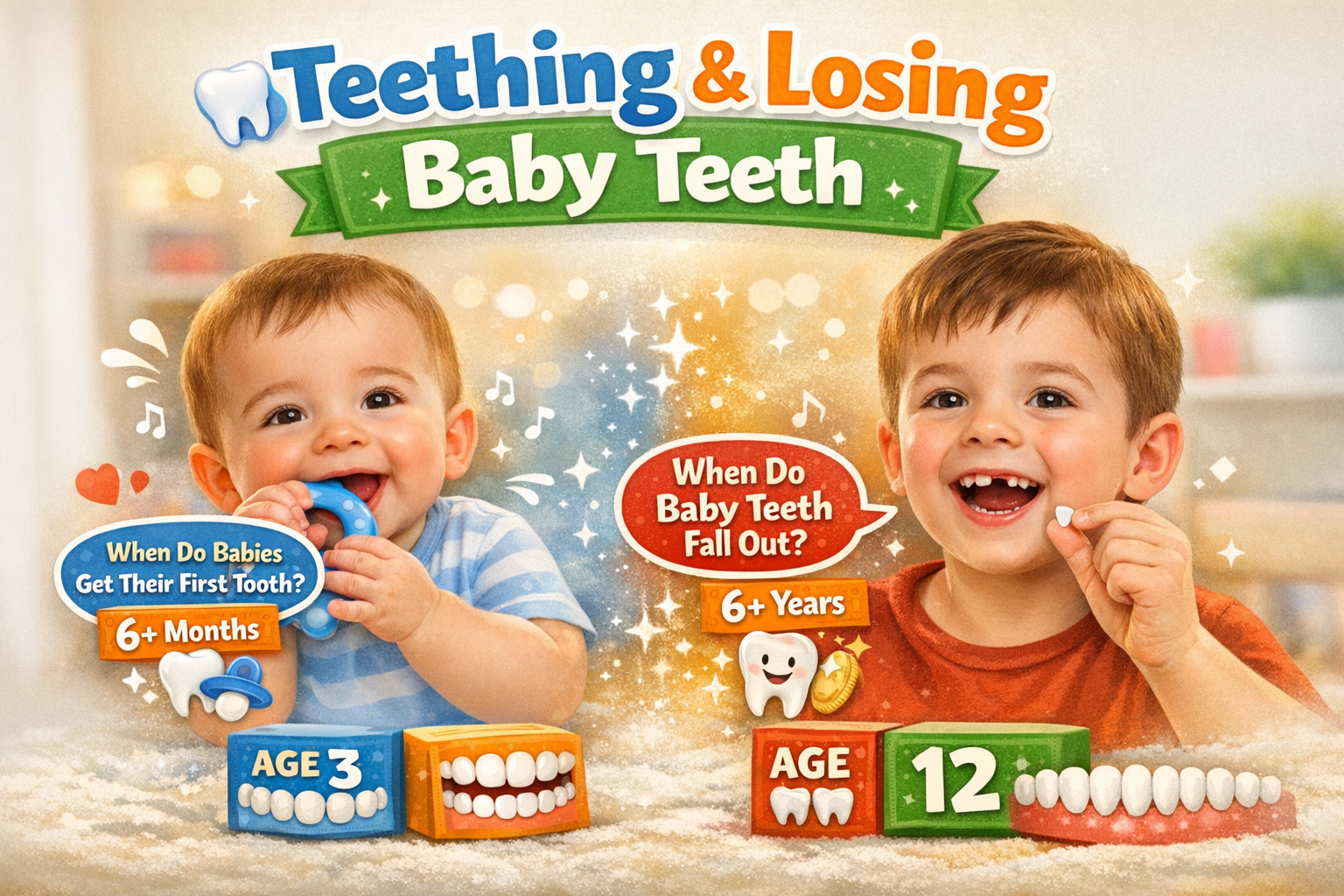
🦷 When Do Babies Start Teething & When Do Baby Teeth Fall Out?
Teething and losing baby teeth are two major milestones in your child’s oral development. Parents often wonder: When will my baby’s first tooth appear? and later, When will those baby teeth fall out? Understanding these timelines helps you support your child’s comfort, health, and growth.

📊 Teething Timeline: When Do Babies Get Their First Teeth?
Most babies start teething between 6–10 months, though some may begin earlier or later.
| Age Range | Typical Teething Milestones | Teeth That Appear |
|---|---|---|
| 4–7 months | First teeth may erupt | Lower central incisors (bottom front) |
| 8–12 months | More teeth emerge | Upper central incisors (top front) |
| 9–13 months | Expanding smile | Upper lateral incisors |
| 10–16 months | More chewing ability | Lower lateral incisors |
| 13–19 months | Molars appear | First molars |
| 16–23 months | Canines emerge | Upper and lower canines |
| 23–33 months | Full set of baby teeth | Second molars |
Stats: By age 3, most children have a complete set of 20 primary teeth.
😣 Signs of Teething
- Drooling more than usual.
- Chewing on fingers, toys, or objects.
- Irritability or fussiness.
- Swollen or tender gums.
- Trouble sleeping.
🌟 Tips to Soothe Teething Discomfort
- Offer a chilled (not frozen) teething ring.
- Gently massage gums with a clean finger.
- Provide safe chew toys.
- Wipe drool to prevent rashes.
- Consult a pediatrician if fever or severe discomfort occurs.
🧠 Developmental Benefits of Baby Teeth
Baby teeth aren’t just temporary placeholders — they help with:
- Speech development (forming sounds and words).
- Chewing and nutrition (learning to eat solid foods).
- Jaw growth (guiding permanent teeth into place).
- Confidence (smiling and social interaction).
📊 Timeline: When Do Baby Teeth Fall Out?
Baby teeth usually start falling out around 6 years old, making way for permanent teeth.
| Age Range | Teeth That Fall Out | Permanent Teeth Replace Them |
|---|---|---|
| 6–7 years | Lower & upper central incisors | Permanent incisors |
| 7–8 years | Lower & upper lateral incisors | Permanent lateral incisors |
| 9–11 years | First molars | Permanent premolars |
| 10–12 years | Canines | Permanent canines |
| 10–12 years | Second molars | Permanent premolars |
| 12–13 years | Remaining baby teeth | Permanent molars |
| 17–21 years | Wisdom teeth | Final permanent teeth |
Stats: By age 12–13, most children have lost all baby teeth and have 28 permanent teeth. Wisdom teeth bring the total to 32.
❓ FAQs
Q: Is it normal if my baby starts teething before 6 months? A: Yes. Some babies get their first tooth as early as 4 months, while others may not until after 12 months.
Q: What if my child’s teeth don’t fall out on time? A: Delays of a year or two can be normal, but consult a dentist if permanent teeth erupt without baby teeth falling out.
Q: Can teething cause fever? A: Mild temperature changes can happen, but high fever is not typical. Consult a pediatrician if fever persists.
Q: Why are baby teeth important if they fall out anyway? A: They guide permanent teeth into proper alignment, aid speech, and help with nutrition.
Q: How can I care for baby teeth? A: Brush twice daily with a soft toothbrush, avoid sugary snacks, and schedule the first dental visit by age 1.
Q: What if my child loses a baby tooth too early?
A: Early loss can affect alignment. A dentist may recommend a space maintainer to keep room for permanent teeth.